Distribution Center Roofing Along the I-40/I-49 Corridor
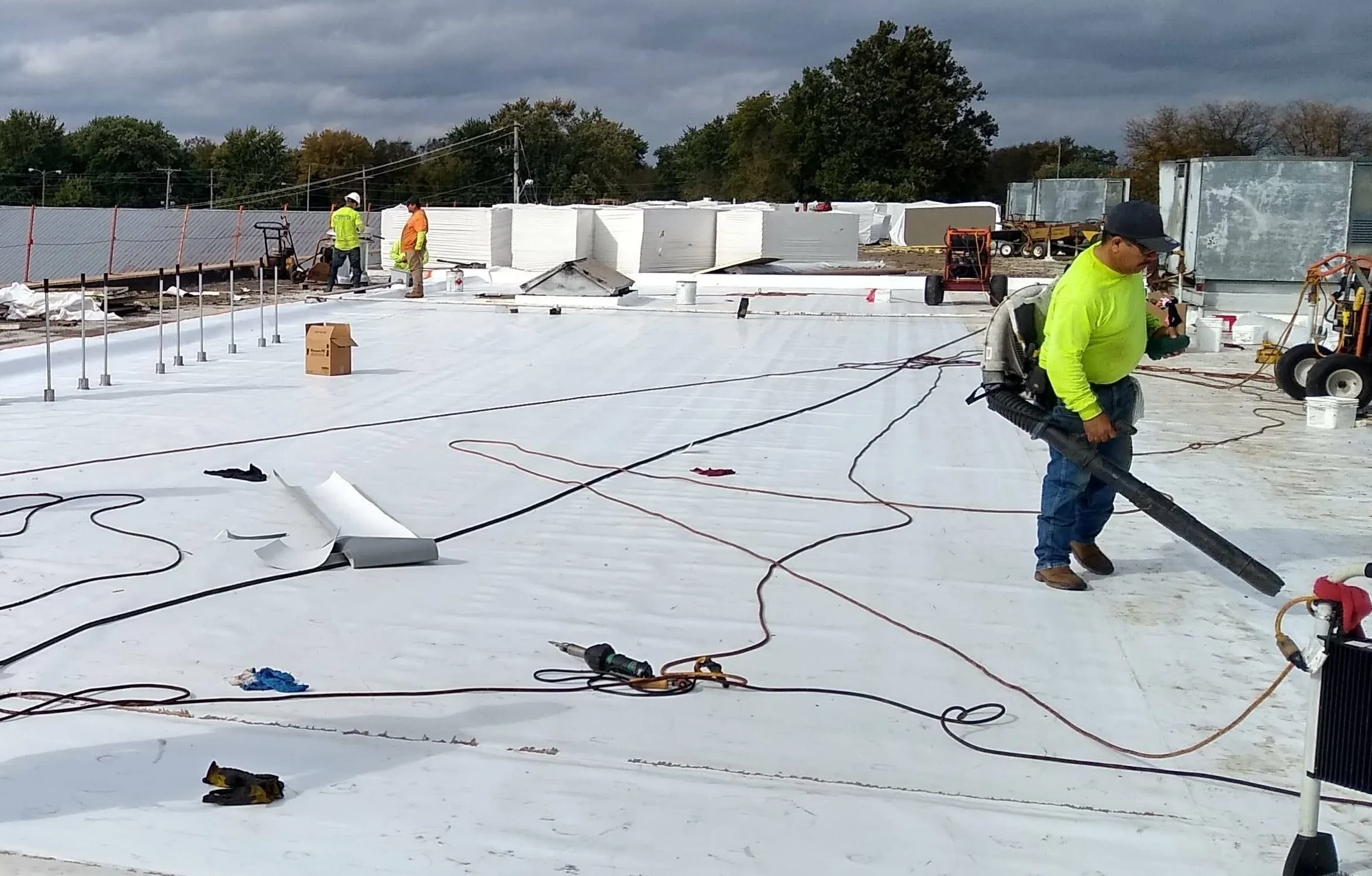
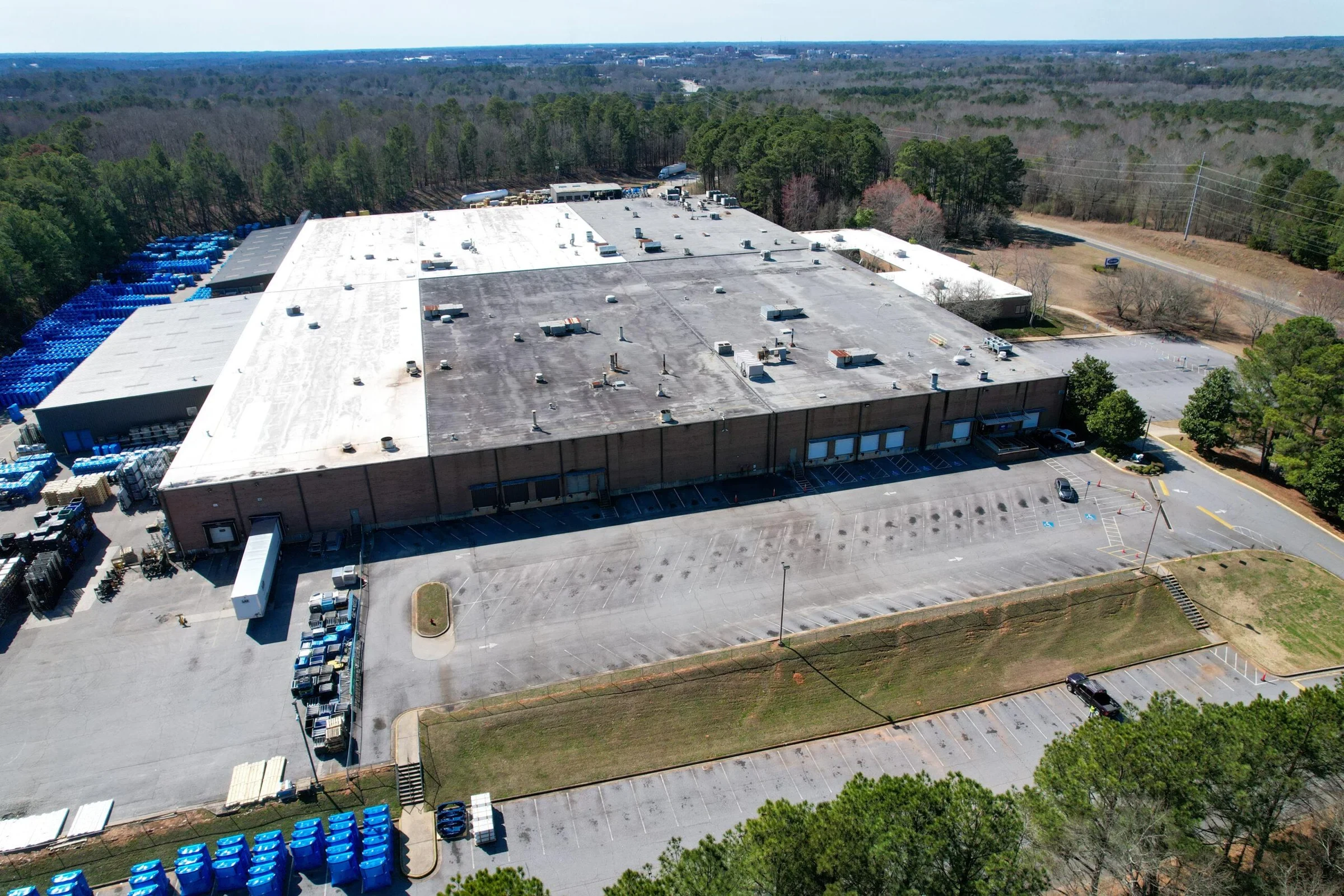
ArcBest is headquartered here, and the interchange where I-40 meets I-49 has pulled dock-high distribution buildings on top of a trucking base that was already established. These roofs run bigger than almost anything else in the market , acres of low-slope membrane broken up by dozens of dock doors, roof-mounted fans, and skylight rows.
Acreage Changes How a Roof Fails
A distribution roof of two hundred thousand square feet or more doesn't fail the way a small commercial building does. Water finds the low point in a drainage design that has to move volume off the field fast, and a single undersized or clogged drain can pond well past what the membrane was built to carry.
We map drainage before we talk about membrane condition on a roof this size, because a scope that addresses only the membrane and ignores slope and drain capacity leaves the actual problem in place.
Dock Doors, Roof Fans, and Skylight Rows
Distribution buildings carry a different penetration pattern than a manufacturing plant , dozens of roof-mounted fan curbs for warehouse air movement, long rows of skylights that daylight the floor below, and dock leveler equipment concentrated at the building edge where trailers back in below.
Skylights are a recurring leak source on this building type specifically because they're installed in long runs and age at a different rate than the membrane surrounding them, so a five-year-old roof can still have a ten-year-old skylight problem.
Trucking-Driven Access Windows
Distribution and trucking operations at this scale don't slow down the way a retail building might in the off-season. We plan roof access around dock traffic, staging lanes, and trailer parking so a crew isn't setting up material staging in a lane a driver needs before dawn.
Typical scope items on a distribution center roof:
- Dock leveler and door header curbs
- Roof-mounted fan and vent curbs
- Skylight rows and smoke vents
- Roof drains and overflow scuppers
- Parapet and eave edge metal
- Rooftop unit platforms and screening
Wind Uplift at the Eave and Parapet
The exposed eave and parapet lines on a large distribution roof take the brunt of straight-line wind that moves through the Arkansas River valley ahead of a squall line. Uplift failures tend to start at corners and work inward when edge metal wasn't fastened to the original spec or has loosened over time.
After a wind event, we check corners and parapet caps first, because that's where a distribution roof loses membrane before the open field ever shows a problem. We size overflow drainage the same way, since a blocked primary drain during a heavy rain band can load a flat roof faster than the structure was designed to handle.
Capital Planning for Large Roof Systems
An owner running a large distribution asset needs a roof plan that fits a capital budget cycle, not a single repair quote. We break scope into what needs attention now, what can be scheduled for next season, and what belongs in a longer-term restoration or replacement decision, tied to real square footage and real drainage counts rather than a rough estimate pulled from a satellite photo without a roof walk to confirm it.
See our warehouse roofing page for smaller-format flex and tenant space that shares some of the same drainage and skylight issues at a different scale.
Ice and Cold-Weather Behavior on a Large Flat Field
Winter ice storms in this part of Arkansas can leave a heavy, uneven load across a distribution roof, particularly where drifting or wind-driven snow builds up against parapet walls and rooftop screening. A drain that's been slowly narrowing with debris all year becomes a real liability the first time meltwater has nowhere to go during a fast thaw.
We check drain baskets and overflow scuppers as part of any pre-winter inspection on a distribution building, since the combination of a large flat field and limited drain count means a blocked primary drain can put weight on the structure that the original design margin wasn't built to absorb for long.
Distribution Roof Questions
How do you inspect a roof this large in one visit?
We walk the field in sections, checking drains, seams, and edge metal by zone, and use the roof plan or aerial reference to make sure every drain and penetration gets covered, including the areas farthest from the access hatch.
What's the most common cause of ponding on a distribution roof?
Undersized or clogged primary drains combined with structural deflection between purlins. We check both before recommending tapered insulation or added drainage.
Can roof work happen without closing dock doors?
Yes, in almost every case. We stage material and equipment away from active dock lanes and coordinate directly with the operations team on trailer schedules.
How often should skylights be inspected separately from the membrane?
Annually at minimum, since skylight gaskets and seals age faster than a well-maintained membrane and are a common source of leaks that get blamed on the roof itself rather than the fixture.
What should happen right after a hailstorm hits a distribution roof?
A roof walk focused on parapet edges, curb flashing, and skylight frames, with photo documentation of any impact marks before scheduling repair work. We also check overflow scupper openings, since debris knocked loose during a storm can block secondary drainage right when the roof needs it most, and that check alone can prevent a much larger claim later.