Repairing Hail, Wind, and Ice Storm Damage on Fort Smith Roofs
Fort Smith sits far enough into tornado alley that hail, straight-line wind, and the occasional tornado watch are a normal part of the spring calendar, and winter brings its own risk from ice loading and freeze-thaw stress. Storm damage repair starts with an honest assessment of what actually failed, since not every mark on a membrane is a repair-worthy problem and not every quiet-looking roof escaped unharmed.
How Hail Actually Damages a Low-Slope Roof
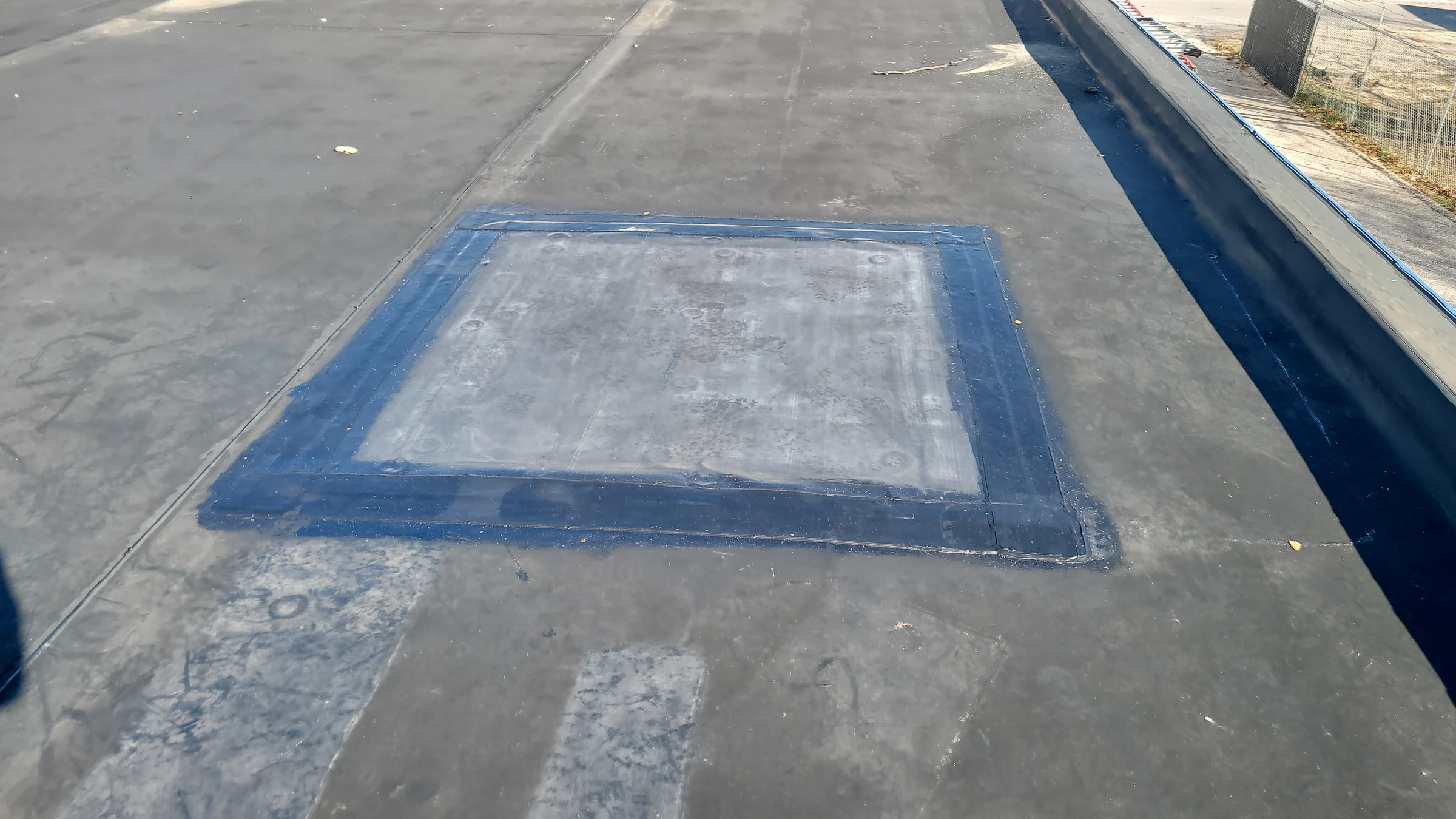
Hail rarely punches straight through a commercial membrane the way it dents a car hood. More often it bruises the membrane, compressing the material and weakening it at the impact point without opening a hole immediately. Those bruises can develop into leaks weeks or months later as the weakened spot continues to flex with temperature and wind. We check for this pattern specifically, since it is easy to miss from the ground and easy to dismiss on a quick surface glance.
On granulated modified bitumen, hail impact often shows as circular granule loss exposing the asphalt underneath. On smooth membranes like TPO or EPDM, impacts can be harder to spot and require closer inspection at each suspected strike point.
Wind Damage: Where It Starts
Wind uplift failure almost always starts at the perimeter, not the middle of the roof. Parapet caps, edge metal, and corner zones take the highest wind pressure in a straight-line wind event or the outer bands of a tornado, and that is where we look first for lifted seams, pulled fasteners, or displaced coping. A field membrane that looks intact from a distance can still have significant perimeter damage that puts the whole roof at risk in the next event if it is not caught and repaired.
Tornado Debris and Direct Impact Damage
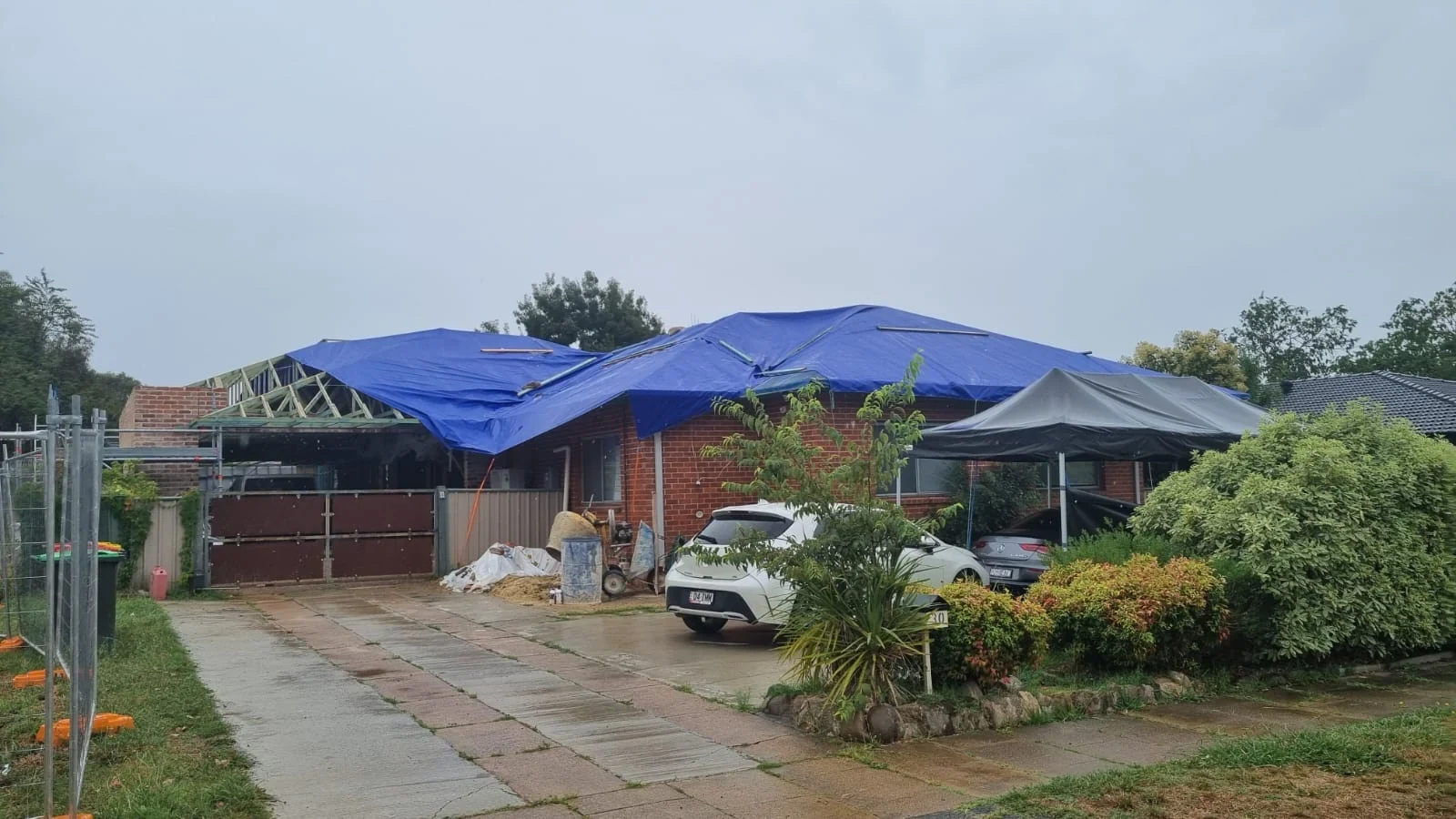
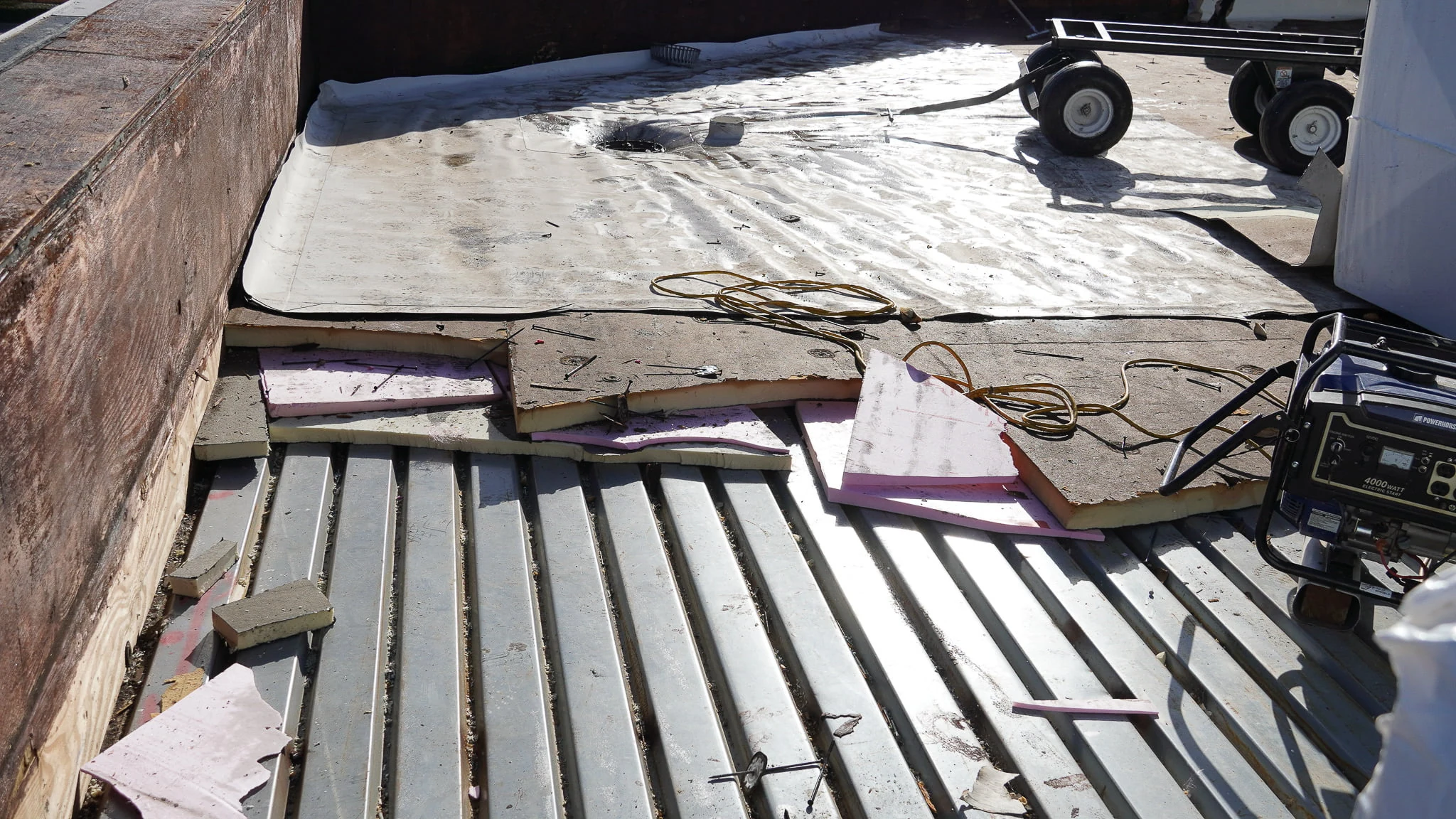
Direct tornado or severe wind damage is more obvious: torn membrane, punctures from airborne debris, displaced rooftop equipment, or sections of roof deck exposed entirely. These situations usually call for emergency dry-in first, followed by a full repair or replacement scope once the extent of the damage is fully assessed. On buildings near the flight approach and support areas around the Air National Guard base, or along the busy freight lanes feeding I-40, debris fields can carry material well outside the immediate storm path, so we walk the full perimeter and adjacent grounds during a post-tornado inspection rather than assuming damage stopped where the visible touchdown ended.
Ice Storm Damage
Ice accumulation adds significant weight loading to a roof structure and can crack or stress rooftop equipment curbs, gutters, and downspouts as ice expands. Ice damming at drains and low points can also force water backward under seams that would otherwise shed normal precipitation without issue. We inspect drainage paths specifically after any significant ice event, in addition to the field membrane.
Cosmetic Marks vs. Real Damage
Not every mark left by a storm needs repair. Surface scuffing on a granulated cap sheet or a shallow dent that does not compress the membrane thickness is often cosmetic and does not affect performance. We separate that kind of surface wear from actual functional damage during the assessment, since treating every visible mark as a repair item runs up cost without improving the roof's condition.
Where the distinction is genuinely close, we lean toward documenting it rather than dismissing it, because a borderline finding today can be useful reference if the same area shows clearer damage after a future storm.
This distinction matters most on older membranes that already show general wear from age and sun exposure, since it can be hard to separate long-term weathering from a specific storm event without a prior baseline to compare against. That is one reason a pre-storm inspection is worth having on record before severe weather season arrives, since it gives us a documented starting point to compare against once damage is reported.
What a Storm Damage Repair Scope Includes
- Full-roof damage assessment, including perimeter, corners, and all penetrations
- Identification of hail bruising versus surface cosmetic marks that do not require repair
- Repair of punctures, torn membrane, and displaced flashing or coping
- Fastener and seam repair at wind-affected perimeter zones
- Drainage inspection and clearing following ice events
- Photo documentation suitable for insurance claim support
Storm Damage Repair Questions From Fort Smith Building Owners
How soon after a storm should we get the roof inspected?
As soon as it is safe to do so. Some damage, especially hail bruising, is easier to identify and document shortly after the event, and getting ahead of it reduces the chance of a delayed leak causing additional interior damage.
Can hail damage be invisible from the ground?
Yes. Bruising and granule displacement on a low-slope membrane are often only visible up close on the roof itself, which is why a ground-level look is not enough to rule out storm damage.
Will you help document damage for our insurance claim?
We provide thorough photo documentation and a written description of the damage we find. We describe what is there factually; whether and how a claim is approved is a decision made between you and your insurance carrier.
Does wind damage always show up right after the storm?
Not always. A partially lifted seam or loosened fastener can look fine initially and fail more visibly during the next wind event, which is one reason a post-storm inspection matters even when nothing looks obviously wrong.
How does ice storm damage differ from wind or hail damage?
Ice damage tends to concentrate at drains, low points, and equipment curbs rather than across the open field of the roof, and it develops from weight loading and ice damming rather than direct impact.