PVC Roofing for Fort Smith's Toughest Exposure Conditions
PVC is the single-ply membrane we reach for when a building's exposure goes beyond what standard TPO handles well , rooftop grease exhaust from food-service tenants, chemical exposure near manufacturing operations, or a building owner who has been burned by seam failures on a prior roof and wants the strongest weld chemistry available. It costs more than TPO, and on this market's roof stock, that added cost is usually reserved for specific conditions rather than a blanket recommendation.
Why PVC Handles Grease and Chemical Exposure Better
TPO membrane can be degraded by prolonged contact with petroleum-based oils and greases, which matters for any building with rooftop kitchen exhaust or nearby industrial processes that vent oily residue onto the roof surface. PVC's chemical composition resists that kind of degradation far better. Around Fort Smith, this comes up most with restaurant and food-service tenants in multi-tenant retail buildings, and with certain manufacturing operations near Chaffee Crossing where process exhaust can settle on adjacent roof areas.
We ask about rooftop exhaust sources and nearby industrial activity before recommending a membrane type, because a grease-exposed TPO roof can show softening and adhesive failure years before a comparable PVC roof would show the same issue. That difference shows up most clearly at seams and flashing laps, where oily residue tends to concentrate, so we inspect those areas closely on any roof with known kitchen exhaust or industrial exposure regardless of which membrane is currently installed.
Weld Strength Under Wind Uplift
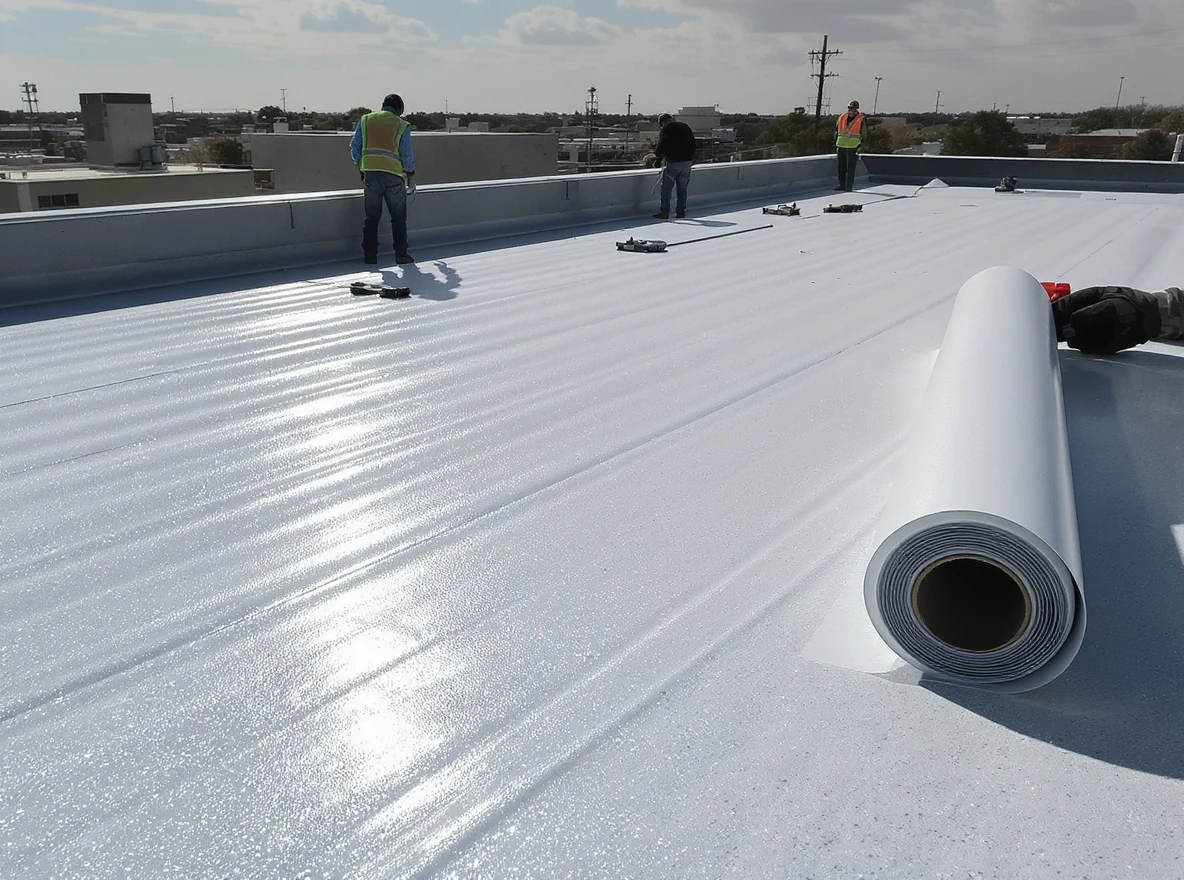
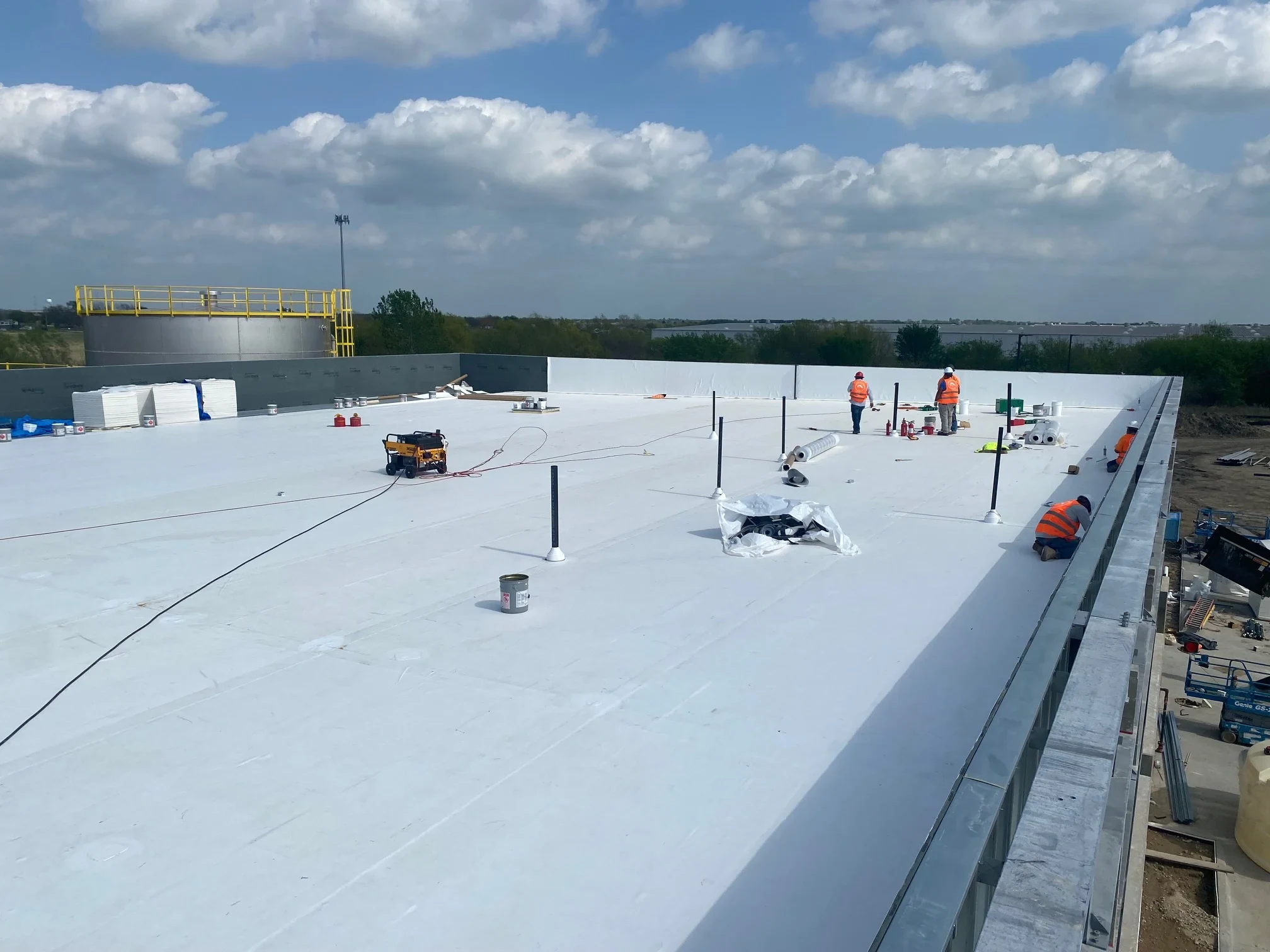
PVC seams are hot-air welded like TPO, but PVC's chemistry generally produces a stronger, more chemically fused bond at the seam. On buildings with significant wind uplift exposure , large open roof areas along the I-40 distribution corridor, or taller buildings that see higher wind speeds at roof level , that added weld strength is a real advantage. Fort Smith's position near the tornado-alley wind corridor means straight-line and downburst wind events happen most spring seasons, and seam integrity under sustained uplift pressure is where roofs most often fail first.
We test every PVC seam with a probe, same as TPO, and pull peel samples on larger commercial jobs to confirm weld strength before final sign-off.
- Hot-air welded PVC membrane with strong chemical seam fusion
- Resistant to grease, oil, and certain chemical exposure that degrades TPO
- Mechanically attached or fully adhered depending on wind exposure and deck
- Reflective white or light-colored surface standard
- Reinforced flashing at curbs, penetrations, and rooftop exhaust equipment
- Suited to food-service, light-industrial, and high-wind-exposure buildings
Hail Resistance
PVC's harder surface performs comparably to TPO under hail impact, with actual resistance driven mostly by sheet thickness and reinforcement rather than the base polymer chemistry. We spec 60-mil or heavier PVC on buildings with real hail exposure, which describes most of the flat commercial roof stock in this market given the river valley's spring storm pattern.
Summer Heat and Reflectivity
Standard PVC membrane comes in reflective white, performing similarly to white TPO in reducing rooftop surface temperature through Fort Smith's hot, humid summer months. Lower rooftop temperature reduces cooling load and slows the thermal cycling that stresses seams and flashings over a roof's service life.
Ice-Storm and Winter Loading
PVC stays serviceable in cold conditions, though extremely low temperatures can make the membrane stiffer during installation, so we schedule PVC welding around forecasted temperature windows more carefully than we do for EPDM. Once installed, PVC handles the occasional western Arkansas ice storm and the freeze-thaw cycling at drains without unusual concern, provided drainage is detailed correctly.
Cost Versus TPO
PVC typically costs more per square than TPO for comparable thickness, and for a standard warehouse or office roof without grease, chemical, or unusual wind exposure, TPO remains the better value. We recommend PVC specifically where its chemical resistance or weld strength addresses a real condition on that building, not as a default upgrade. When an owner asks us to justify the extra spend, we walk through the specific exposure at that roof , grease, chemical, or high wind zone , rather than making a general claim that PVC outperforms TPO across the board, because on most roofs in this market it doesn't need to.
Fort Smith PVC Roofing Questions
When does PVC make more sense than TPO for a Fort Smith building?
Mainly when there is rooftop grease or chemical exposure, or when a building's wind exposure profile calls for the strongest available seam weld. For a typical low-exposure roof, TPO is usually the more cost-effective choice.
Does PVC last longer than TPO?
Service life depends more on installation quality, attachment method, and maintenance than on membrane type. PVC does resist certain chemical exposures better, which can extend effective service life on buildings with that specific exposure.
Can PVC be welded in cold weather?
It can, but the membrane becomes stiffer at lower temperatures, so we plan installation timing around weather windows to ensure proper weld quality rather than rushing a cold-weather install.
Is PVC a good fit for restaurant or food-service buildings?
Yes , PVC's resistance to grease and oil exposure from rooftop kitchen exhaust is one of its clearest advantages over TPO for that specific tenant type.
Does PVC cost significantly more than TPO installed?
It typically runs higher per square, though the gap varies by project size and specification. We provide a direct cost comparison against TPO for any building where PVC is a reasonable option, so the owner can weigh the tradeoff.