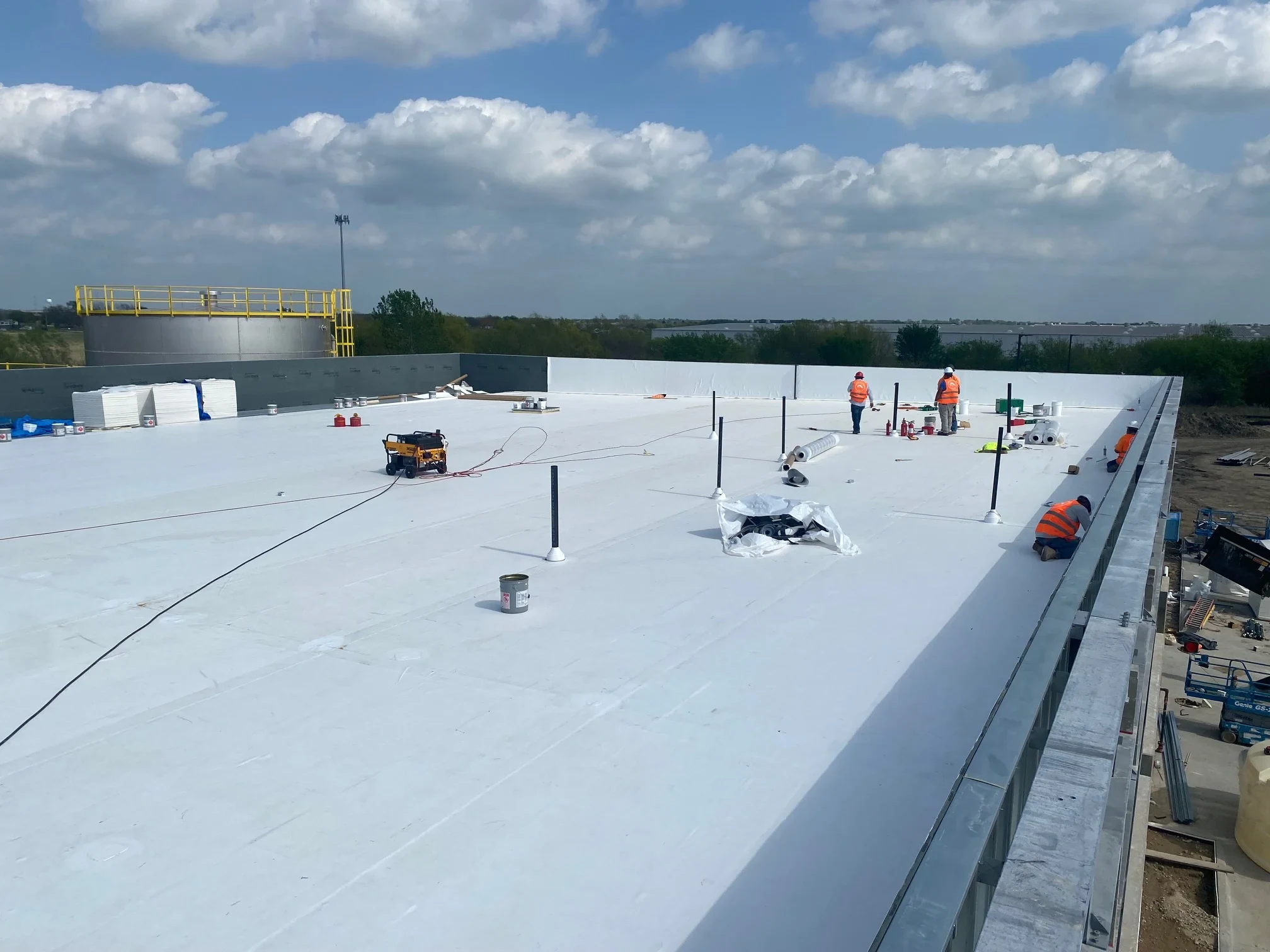
60-Mil TPO for Sebastian County Roofs That Take a Beating
We spec 60-mil TPO on more Fort Smith buildings than any other single-ply thickness, mostly because the roofs here get hit twice: hail off the Arkansas River valley storm track and sustained wind loading from the tornado-alley edge that runs through western Arkansas. The extra 15 mils over a 45-mil sheet buys real margin against both.
Why Thickness Matters on This Roof Stock
A 45-mil TPO sheet works fine on a low-slope roof in a mild climate. It does not hold up as well once hail starts landing on it every spring, which is the reality for warehouses along I-40 and manufacturing buildings near Chaffee Crossing. The thicker 60-mil sheet has more material over the scrim, so a hailstone that dents or bruises a 45-mil membrane is more likely to leave only surface marking on 60-mil, without breaching down to the fabric layer.
Thickness also matters for foot traffic. Distribution buildings around ArcBest's Fort Smith operations get regular rooftop HVAC and equipment servicing, and repeated foot traffic wears thin membrane faster than it wears thick membrane. On buildings with frequent mechanical access, we favor 60-mil almost automatically.
Hail Impact Rating and What It Actually Means
TPO membranes carry impact resistance ratings tested under standardized hail-simulation protocols, and 60-mil sheets generally test better than thinner gauges because there is more material to absorb the strike energy before it reaches the reinforcing scrim. We do not promise a hail-proof roof , no membrane is , but we can tell a building owner honestly that 60-mil gives more cushion against the granular hail events that come through the river valley most springs.
What we watch for after a hail event is scrim exposure: white fibers showing through the membrane surface where the hailstone broke the top ply. On 60-mil roofs we inspect, this shows up less often than on 45-mil roofs of the same age, which is the practical reason we lead with the heavier sheet on storm-exposed buildings.
Seam Performance Under Wind Uplift
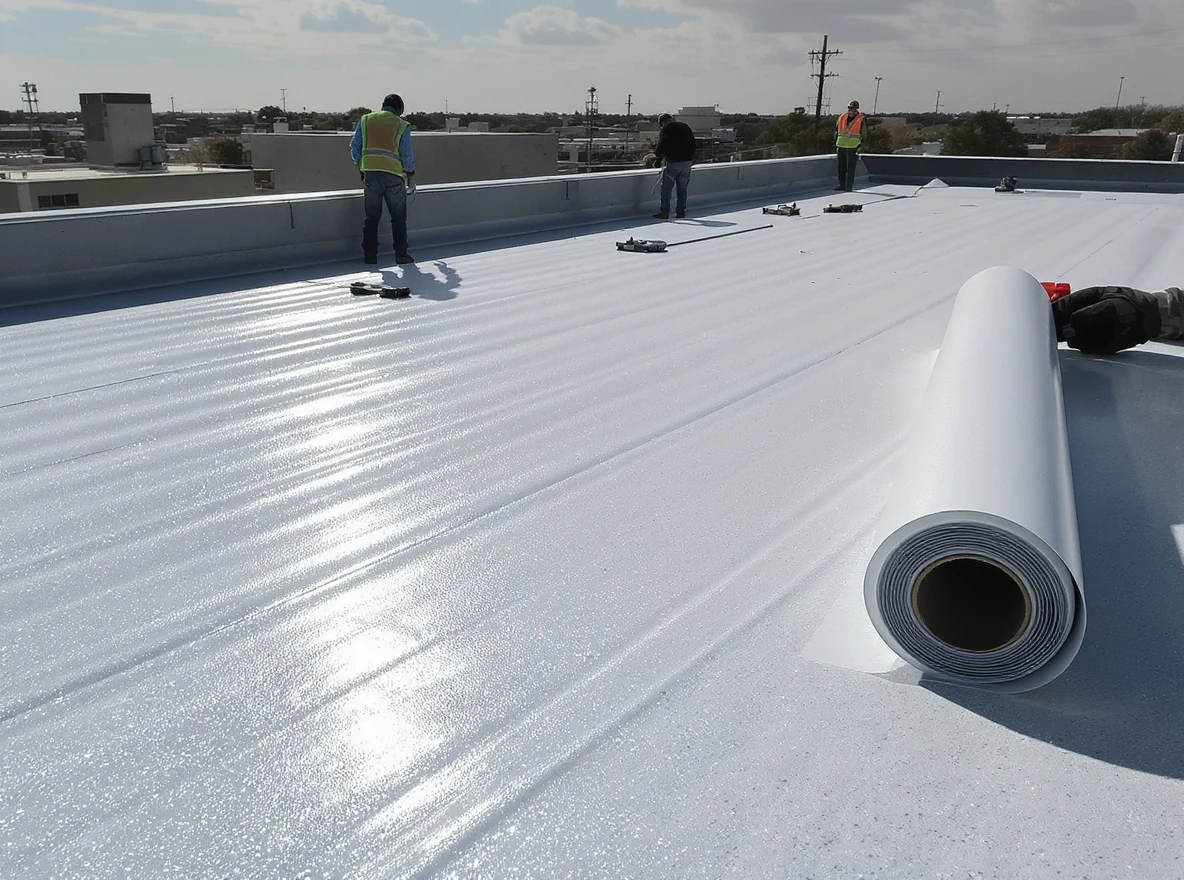
Fort Smith sits close enough to the tornado-alley edge that wind uplift design matters even outside a direct tornado track , straight-line wind and downburst events during spring storm season put real uplift pressure on flat and low-slope roofs. TPO seams are hot-air welded, and a thicker sheet holds heat more evenly during welding, which in our experience produces a more consistent weld along the full seam length. Seam failure under uplift almost always starts at a weak point in the weld, not in the field membrane, so seam quality control matters as much as sheet thickness.
We test seams with a probe on every job and pull peel samples on larger installs before we sign off. On re-roofs where the prior contractor used 45-mil with inconsistent welds, we have found seam separation concentrated at parapet corners and roof-edge terminations , exactly where uplift pressure concentrates per wind design tables.
- 60-mil sheet thickness for added hail and puncture resistance
- Hot-air welded seams tested with a seam probe on every run
- Mechanically attached or fully adhered systems depending on deck and wind exposure
- Reinforced membrane at parapets, curbs, and roof-edge terminations
- Compatible flashing details for rooftop HVAC common on manufacturing and distribution buildings
- White or gray reflective surface to reduce summer rooftop heat load
Humid Summer Performance
Fort Smith summers run hot and humid, and TPO's reflective white surface keeps rooftop membrane temperatures lower than dark membranes like EPDM, which matters for HVAC units mounted on the roof deck and for slowing thermal cycling stress on the membrane itself. Humidity does not degrade TPO the way it can degrade some adhesives, but it does affect installation , we schedule welding around dew point and moisture conditions so seams cure properly rather than trap surface moisture.
Ice and Cold-Weather Loading
Ice storms are less frequent here than in the northern half of the state, but Fort Smith gets them, and ponded water that refreezes at membrane seams and drains is a real stressor over a multi-year roof life. Sixty-mil TPO's added body helps resist the abrasion that ice movement can cause at drain bowls and low points, and we detail drains and scuppers with extra care on roofs we know pond even slightly.
Where We Use It
We spec 60-mil TPO most often on distribution and warehouse roofs along the I-40 corridor, manufacturing buildings near Chaffee Crossing, and any roof with heavy rooftop mechanical equipment. For lower-traffic, lower-exposure buildings, a 45-mil sheet can still make financial sense , we walk owners through that tradeoff rather than defaulting to the thicker sheet on every job.
Questions Fort Smith Building Owners Ask
Is 60-mil TPO worth the extra cost over 45-mil?
On buildings with hail exposure, heavy foot traffic, or long expected service life, yes , the added material cost is small relative to the total roof budget and it buys meaningful margin against the two things that damage TPO fastest here: hail strikes and wear from rooftop equipment servicing.
Can 60-mil TPO go over an existing roof?
Sometimes, if the existing deck and insulation pass inspection and local code allows a recover in that jurisdiction. We inspect the existing roof assembly first , wet insulation or a failing deck means tear-off is the right call regardless of membrane thickness.
How does 60-mil TPO handle Fort Smith's temperature swings?
TPO is formulated to stay flexible across a wide temperature range, which suits a climate that swings from humid 95-degree summers to occasional single-digit winter nights. The thicker sheet resists cracking at seams and flashings better than thinner membranes over repeated thermal cycles.
Does color affect performance beyond reflectivity?
White is standard for reflectivity and lower rooftop temperatures. Gray is available and used occasionally where a building owner wants less visible dirt streaking; it performs the same structurally, with a modest reduction in reflectivity.
What warranty terms are typical on 60-mil TPO?
Manufacturer warranty terms vary by system and attachment method and are set by the membrane manufacturer, not by us. We document the installed system and attachment details so the warranty paperwork reflects exactly what went on the roof.