Commercial Roof Replacement in Fort Smith
Commercial Roofing Services
Commercial Roof Replacement Planning in Fort Smith
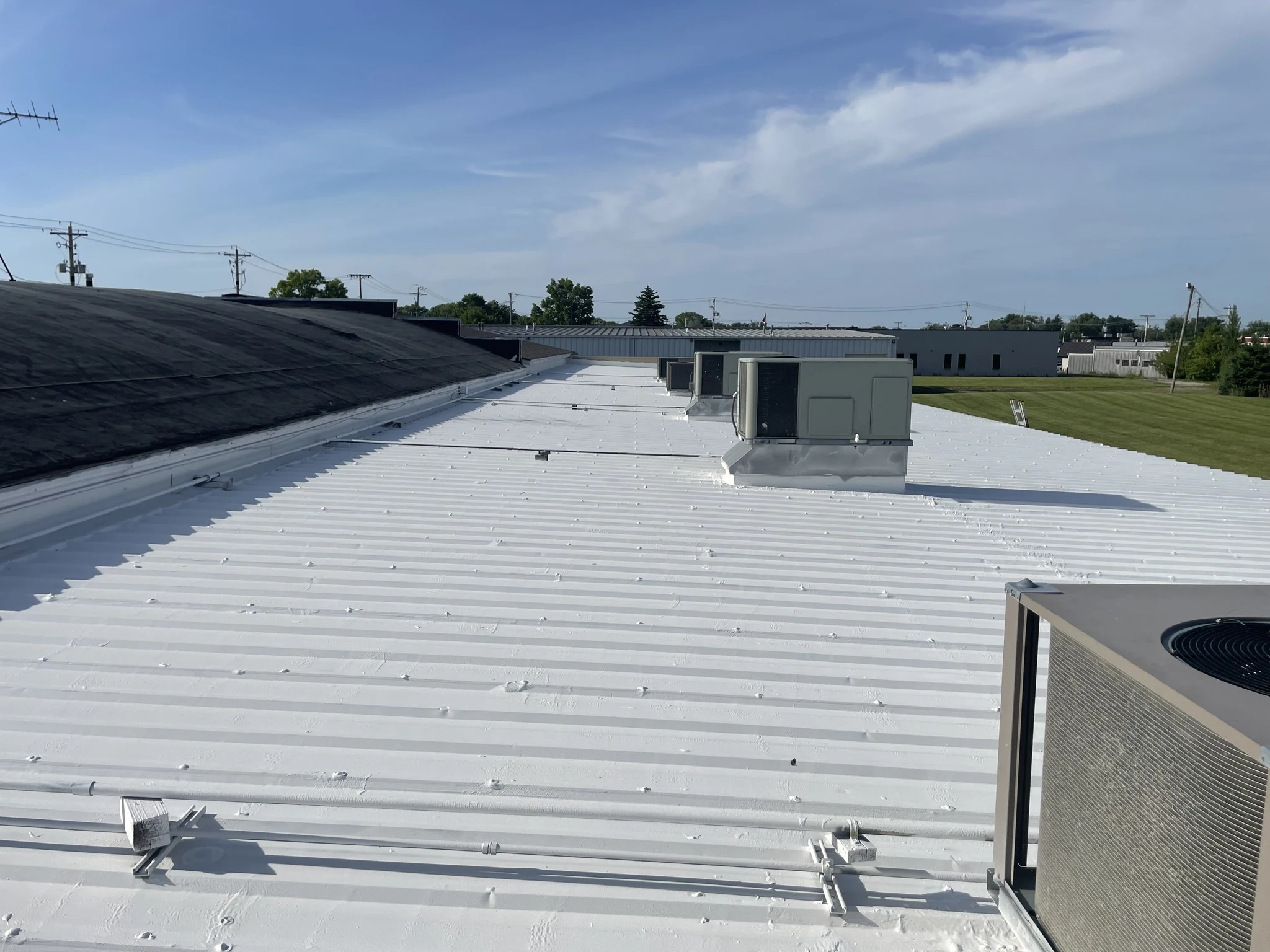
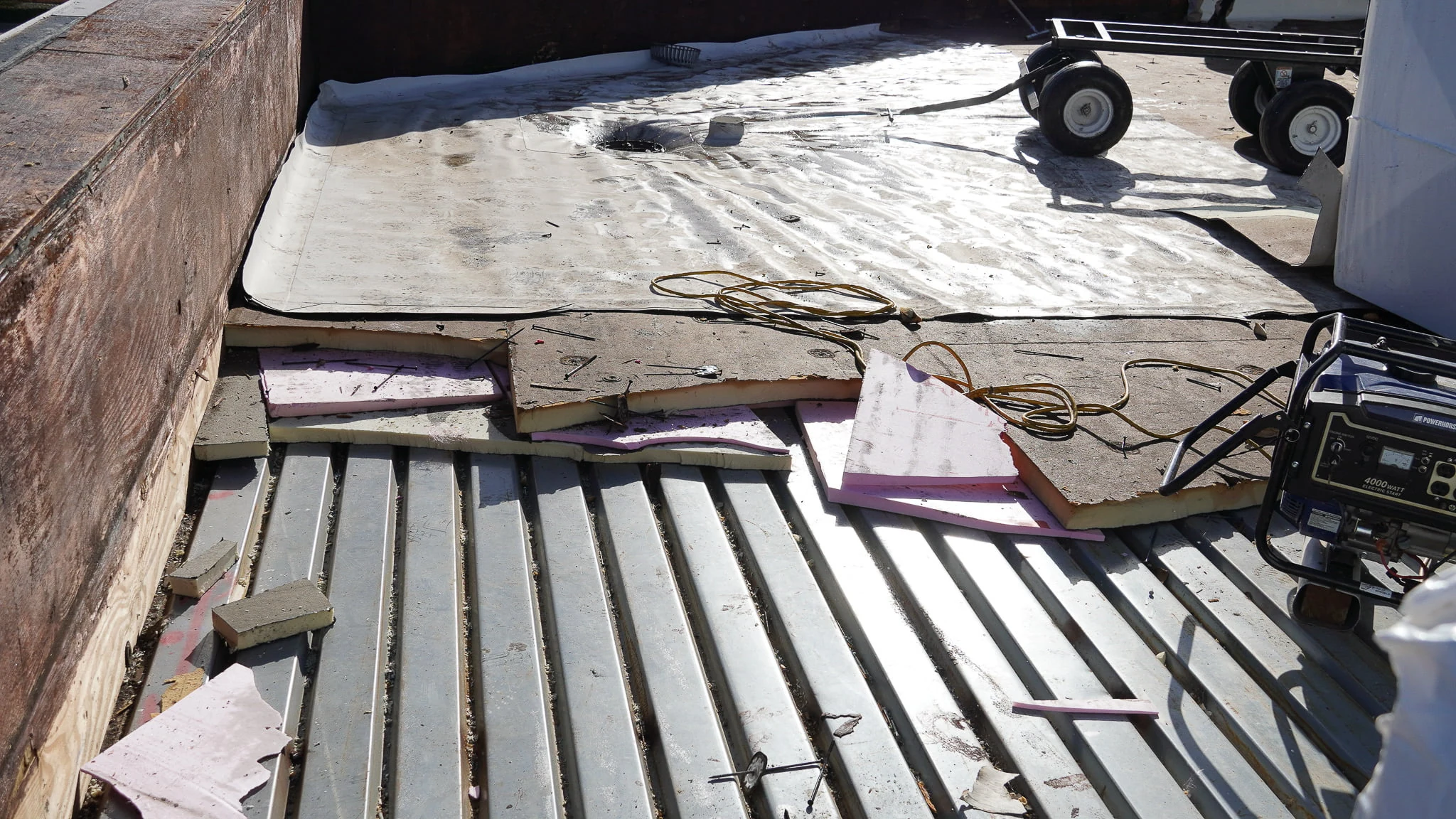
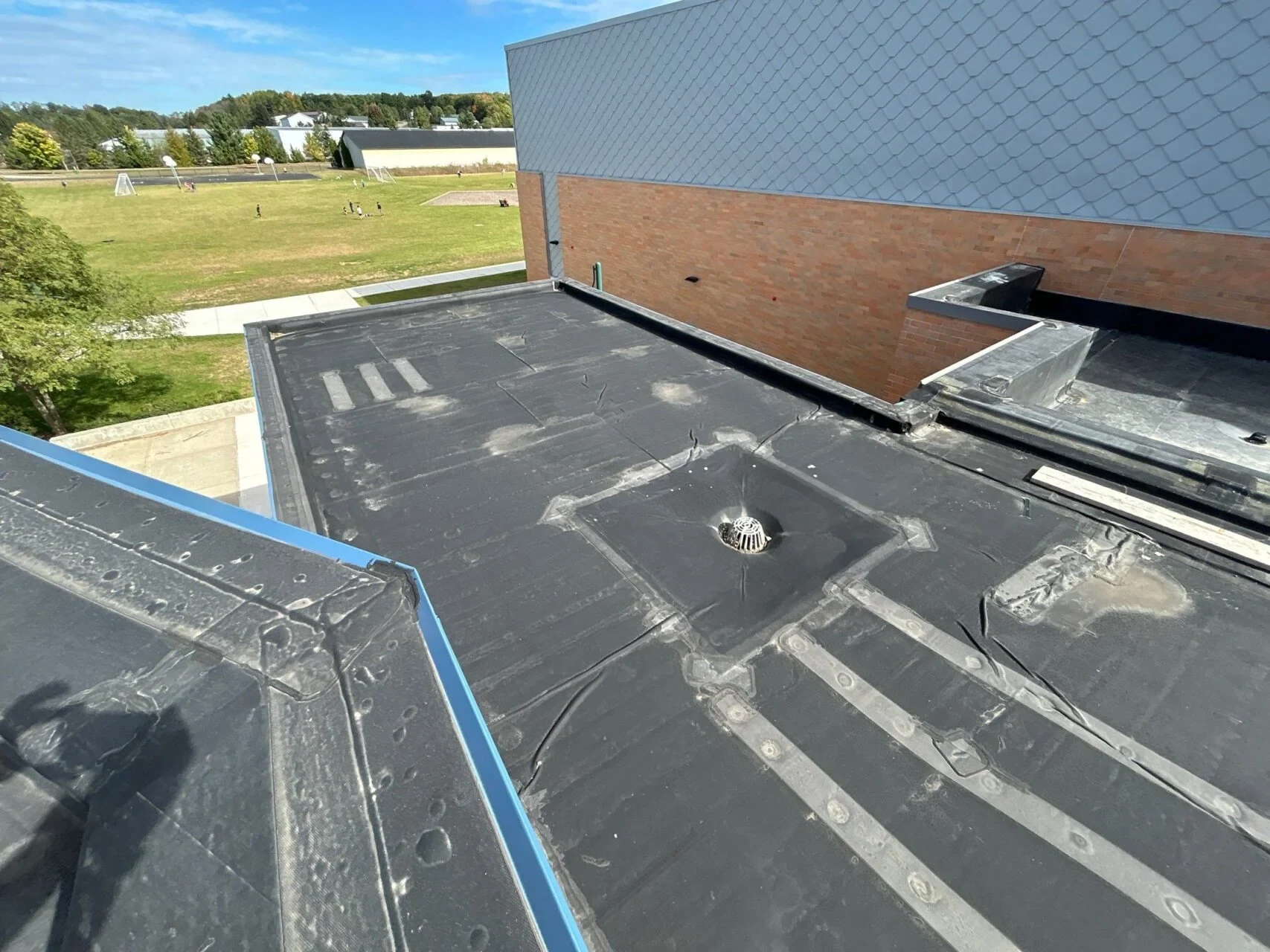
The replacement plan explains tear-off or recover assumptions, insulation and drainage needs, occupied-building phasing, system options, and closeout requirements. Some roofs cannot be recovered honestly, either because the deck underneath has taken on water for years or because past repairs stacked layer on layer until code will not allow another. Tear-off and replacement strips the building down to a sound deck and starts over. It costs more than a recover job, but on a roof that has been failing quietly for a while, it is the only way to stop paying for the same problem twice.
Why Tear-Off Becomes Necessary
Wet insulation is the most common trigger. Once moisture gets trapped under a membrane, it does not dry out on its own, and building on top of it with a recover system just seals the water in. A moisture scan during our inspection tells us how much of the roof is affected before we quote the job, rather than discovering it mid-tear-off.
Deck deterioration is the other common trigger, especially on older manufacturing buildings and downtown warehouse structures where the original deck has been through decades of freeze-thaw cycling and past leak damage. Steel deck can rust through at fastener points, and lightweight insulating concrete decks can crumble at the surface after years of trapped moisture. Either condition needs deck repair before a new membrane goes down.
What Comes Off, and What We Check Underneath
Tear-off means removing the membrane, insulation, and any cover board down to the deck, disposing of it properly, and inspecting the exposed deck section by section as we go. We do not tear off more than we can inspect and dry in before the end of the day, which matters in a market where afternoon storms can build fast in spring and early summer.
Where we find soft or rusted deck, we cut it out and replace it with matching material before insulation goes back down. Skipping that step to save time is how a new roof ends up with a soft spot within a year or two.
Staging and Disposal on Active Industrial Sites
A lot of the buildings we tear off and replace are still running full shifts underneath, whether that is a distribution operation near the I-40 corridor moving freight through ArcBest and other carrier lanes, or a manufacturing floor that cannot stop production for a roofing crew. We stage dumpsters and material lifts away from active dock doors, coordinate crane and lift access with site management, and keep debris containment tight so nothing ends up on the ground near forklift traffic or employee parking.
Disposal itself gets handled through proper haul-off, not left on-site in a pile waiting for a slow week. Old built-up roofing with gravel ballast generates a lot of material weight, and we plan dumpster swaps around that rather than letting debris back up the schedule.
Sequencing Around Weather
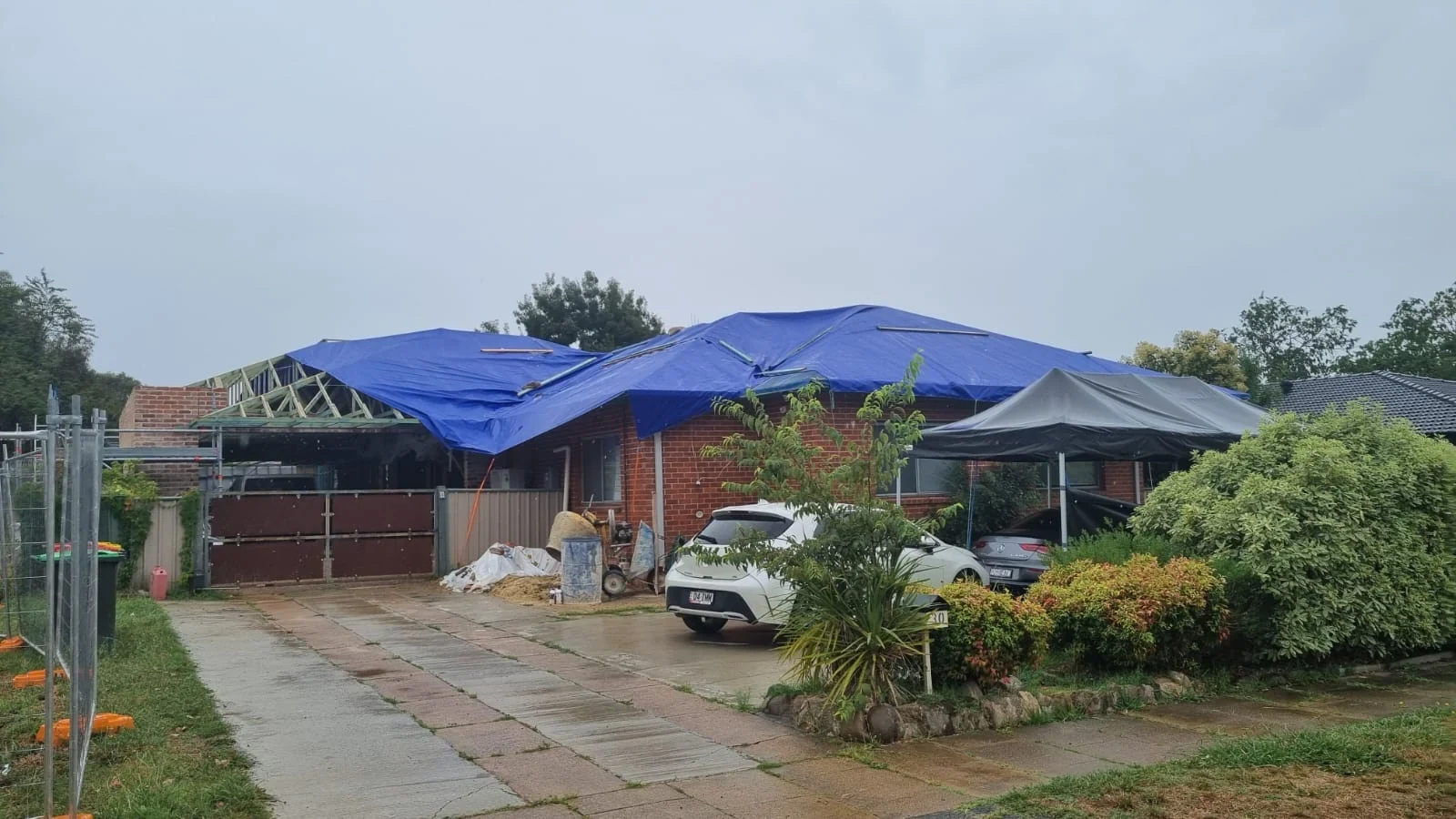
Sebastian County gets real storm exposure in spring, from straight-line wind to hail to the occasional tornado watch, and winter brings ice storms that can shut a job site down for days. We do not open a section of roof larger than the crew can dry in before a forecasted system arrives, even if that means slower daily progress than a wide-open tear-off would allow. A roof half torn off with rain moving in overnight is a bigger loss than a few extra scheduling days.
Warranty Considerations on a Full Tear-Off
A tear-off and replacement resets the warranty clock in a way a recover system does not always allow, since the manufacturer is now backing a full new assembly from the deck up rather than an overlay on an existing roof. That matters most for buildings changing ownership or hands within a lease, where a fresh, transferable warranty carries real value during due diligence.
We document the tear-off and deck repair work in enough detail to support the manufacturer's warranty application, including photos of any deck sections replaced and the fastening pattern used at the perimeter. Skipping that documentation step is a common reason warranty claims get delayed later, and it costs nothing to do it right the first time.
What a Tear-Off and Replacement Scope Includes
- Full removal of existing membrane, insulation, and cover board
- Section-by-section deck inspection as tear-off progresses
- Deck repair or replacement where rust, rot, or crumbling is found
- Proper haul-off and disposal of all removed roofing material
- New insulation installed to current code requirements
- New membrane with enhanced perimeter and corner fastening
- Temporary dry-in at the end of each work day until the roof is fully closed
- Warranty documentation package for the completed assembly
Questions About Tear-Off Projects in Fort Smith
How do you decide how much roof to open in a day?
We size each day's tear-off section to what the crew can fully dry in before quitting time, based on crew size, roof complexity, and the forecast. Weather risk drives that number more than schedule pressure does.
What happens if you find deck damage after the project has already started?
Deck repair gets priced as a documented unit-cost item in the original proposal whenever possible, based on what the moisture scan suggests. If additional damage surfaces once tear-off is underway, we document it with photos and get approval before proceeding.
Can tear-off happen while our warehouse or plant stays open?
Yes, in most cases. We stage away from active dock and production areas and communicate daily work zones to your operations team so forklift and trailer traffic is not routed under an open roof section.
Is tear-off always more expensive than a recover system?
Generally yes, since it involves more labor and disposal cost. But on a roof with wet insulation or deck problems, a recover system just traps the existing damage under new material, which usually costs more in the long run through repeat leaks.
How do you handle old gravel-surfaced built-up roofs downtown?
Gravel ballast adds significant weight and volume to tear-off debris, so we plan disposal logistics and dumpster capacity around that up front rather than discovering the tonnage mid-project.
Plan access, interiors, tenants, and daily dry-in
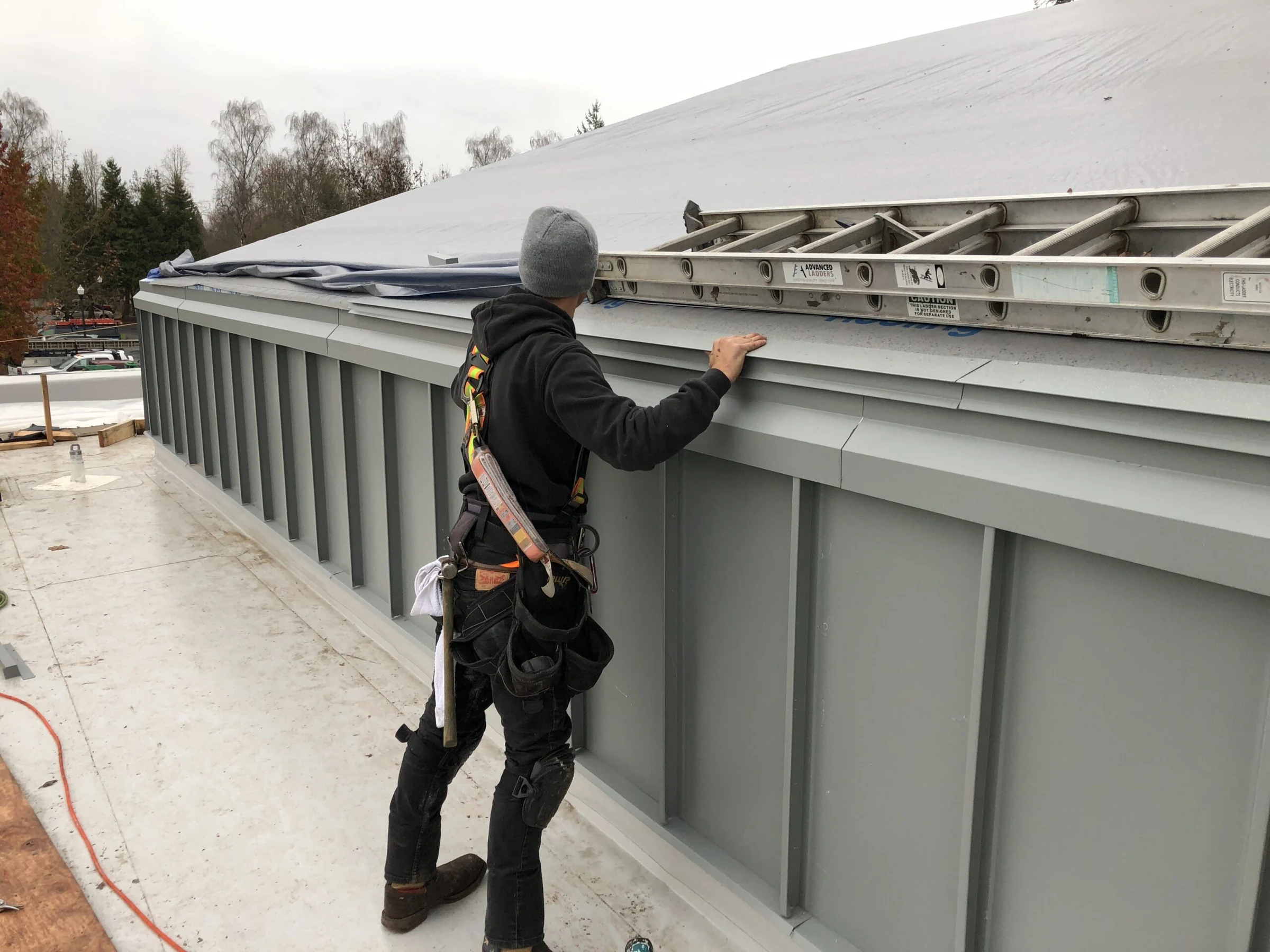
Government Public Sector, Manufacturing Operators, and Logistics 3Pl do not share the same interruption tolerance. The roof scope should be written around the occupied property as well as the exterior defect. Access and protection notes should cover ladders or hatches, staging, falling-object zones, odor and noise, equipment clearances, daily cleanup, weather stops, and the rooms directly below openings or test cuts. Operating controls are roof-quality controls. Water, debris, odor, noise, or an unsecured access point can harm the owner even when the installed detail itself is correct, so those risks need owners and closeout checks.
Separate immediate service from capital work
The decision point is when replacement is necessary, whether recover remains viable, which assembly fits the building, and how the work belongs in the ownership budget. The evidence may support a small permanent repair, a broader corrective scope, a restoration evaluation, recover design, or tear-off, but the report needs to show why. Compare the distribution of wet materials, attachment and deck concerns, drainage, detail density, repair frequency, disruption, expected ownership period, energy goals, code assumptions, and warranty requirements. Cost without those differences is not a lifecycle comparison. A smaller scope is not automatically prudent, and a larger scope is not automatically safer. The defensible option is the one whose boundaries match the documented condition and the owner's operating requirements.
The handoff should survive the service call
The practical handoff is a capital plan and future service schedule for the new roof rather than a project that ends at installation. The next person should receive the property address, roof-area identifiers, contacts, access notes, photographs, temporary measures, completed work, open recommendations, and timing. The record should support both field work and management review. Technicians need locations and prior details; ownership needs priorities, open risk, completed spending, next inspection dates, and a defensible future sequence. Recurring service should not disappear when a capital project begins. Commercial Roofers of Fort Smith can preserve the agreement and roof history while larger work is scoped, completed, closed out, and returned to inspection status.
Collect the details that shape safe dispatch
A useful intake for Commercial Roofers of Fort Smith identifies who can grant access, where water is entering, what operations are affected, whether electrical or ceiling hazards exist, how the symptom changes with weather, and which roof records or photographs are available. Interior photographs can preserve stain limits and active-drip locations before ceiling materials are moved. Roof photographs from facility staff may help with orientation, but they do not replace safe field verification or authorize untrained personnel to enter the roof. That intake determines whether the immediate need is interior protection, controlled roof access, weather-limited stabilization, drainage attention, or a scheduled diagnostic visit. It also gives the crew a safer and more focused starting point.
Define scope and pricing boundaries
The owner should see the boundary between the base scope and contingent work. That includes moisture limits, substrate repair, additional layers, damaged deck, blocked piping, inaccessible details, hazardous materials, and work by other trades. Alternates are useful when they compare real decisions, such as repair versus restoration preparation or recover versus tear-off. They are less useful when major necessary work is moved out of the base price simply to make one proposal appear lower. A reviewable proposal lets ownership compare boundaries, evidence, materials, quantities, disruption, and closeout,not just totals. The goal is a scope that remains understandable after the salesperson leaves the room.
Why local exposure changes the field plan
Fort Smith, AR roofs work through severe thunderstorms, hail, wind, high heat, and concentrated heavy rainfall. That exposure guides the field sequence, but it does not by itself explain widespread wet insulation, exhausted details, repeated failures, incompatible repairs, unsafe deck conditions, or lifecycle costs that no longer support continued patching. Start with the room, ceiling grid, equipment, wall line, and time of entry, then carry those coordinates to the roof. Comparing high and low points, rooftop details, prior patches, and flow paths is more reliable than standing over the first wet-looking surface. Commercial roof decisions improve when the field record is built before a preferred solution is selected. Record what was observed, what remains an inference, and what weather, access, equipment, overburden, or concealed construction prevented the crew from confirming.
Document the condition before choosing the scope
A decision-grade Fort Smith roof record includes existing roof layers, moisture and core information, deck condition, code and insulation assumptions, drainage, edge metal, equipment, access, phasing, alternates, warranty basis, and closeout requirements. Conditions should be organized by roof area and priority rather than buried in a chronological photo dump. The practical method is to verify the assembly and deck, define tear-off or recover limits, coordinate drainage and penetrations, plan temporary protection, and phase the work around building operations. Where destructive or electronic testing is proposed, the scope should identify its purpose, limitations, and restoration procedure before work begins. Observed facts, recommended actions, completed work, and open items should never share one unlabeled list. Separating them lets an off-site approver see exactly what was authorized and what still needs a decision.
Treat each roof assembly on its own terms
EPDM Black, EPDM White, and Modified Bitumen Sbs can show a similar interior symptom while requiring different investigation and repair details. The observed assembly,not a generic flat-roof label,has to control the scope. Record membrane type, surfacing, insulation and cover-board clues, attachment, flashings, penetrations, edges, and earlier repairs. If the assembly cannot be confirmed visually, say so and define the core or document review needed to confirm it. The final comparison should show which materials can accept repair or restoration, which areas need removal, and which unknowns could change the scope. Product preference comes after those conditions are established.
Fort Smith decision checklist
- Map the interior symptom to a named roof area before selecting a repair detail.
- Record temporary measures separately from permanent work and list every open item.
- Verify drainage, penetrations, walls, edges, earlier repairs, and transitions around the affected area.
- State the observed roof assembly, unknown construction, access limits, and testing assumptions.
- Connect the recommendation to repair, restoration, replacement, maintenance, or capital-planning thresholds.
- Set the next inspection or follow-up date so the roof history continues after this visit.
Commercial roof decision questions
Does this condition automatically mean the roof must be replaced?
No. The review should establish when replacement is necessary, whether recover remains viable, which assembly fits the building, and how the work belongs in the ownership budget. Replacement becomes a defensible recommendation only when the field evidence, moisture, assembly condition, repair history, deck or attachment concerns, and lifecycle comparison support it.
What should the Fort Smith roof scope document?
It should document existing roof layers, moisture and core information, deck condition, code and insulation assumptions, drainage, edge metal, equipment, access, phasing, alternates, warranty basis, and closeout requirements. It should also label temporary and permanent work separately, state assumptions and exclusions, and identify the inspection or service step that follows the current scope.
How does an urgent call become a maintenance or capital plan?
The immediate visit creates the first roof-area record. A follow-up inspection establishes condition and priorities. Completed repairs, recurring observations, drain service, warranties, and future recommendations are then retained so maintenance stays scheduled and larger work can be placed into the appropriate capital year.
From service call to roof plan
Use the next decision, not the biggest sale.
Stabilize the problem, document the roof, compare the viable paths, and keep the resulting roof history active.