TPO for Distribution and Manufacturing Roofs Along the ArcBest Corridor
TPO is the membrane we spec most often on the big, flat roofs that dominate the South 30th Street and Highway 271 logistics corridor. It reflects summer heat, welds into a strong seam, and holds up to the wind loads that come through this part of Arkansas every spring. We install and repair it on manufacturing, distribution, and retail roofs across Sebastian County.
Why TPO Fits This Climate
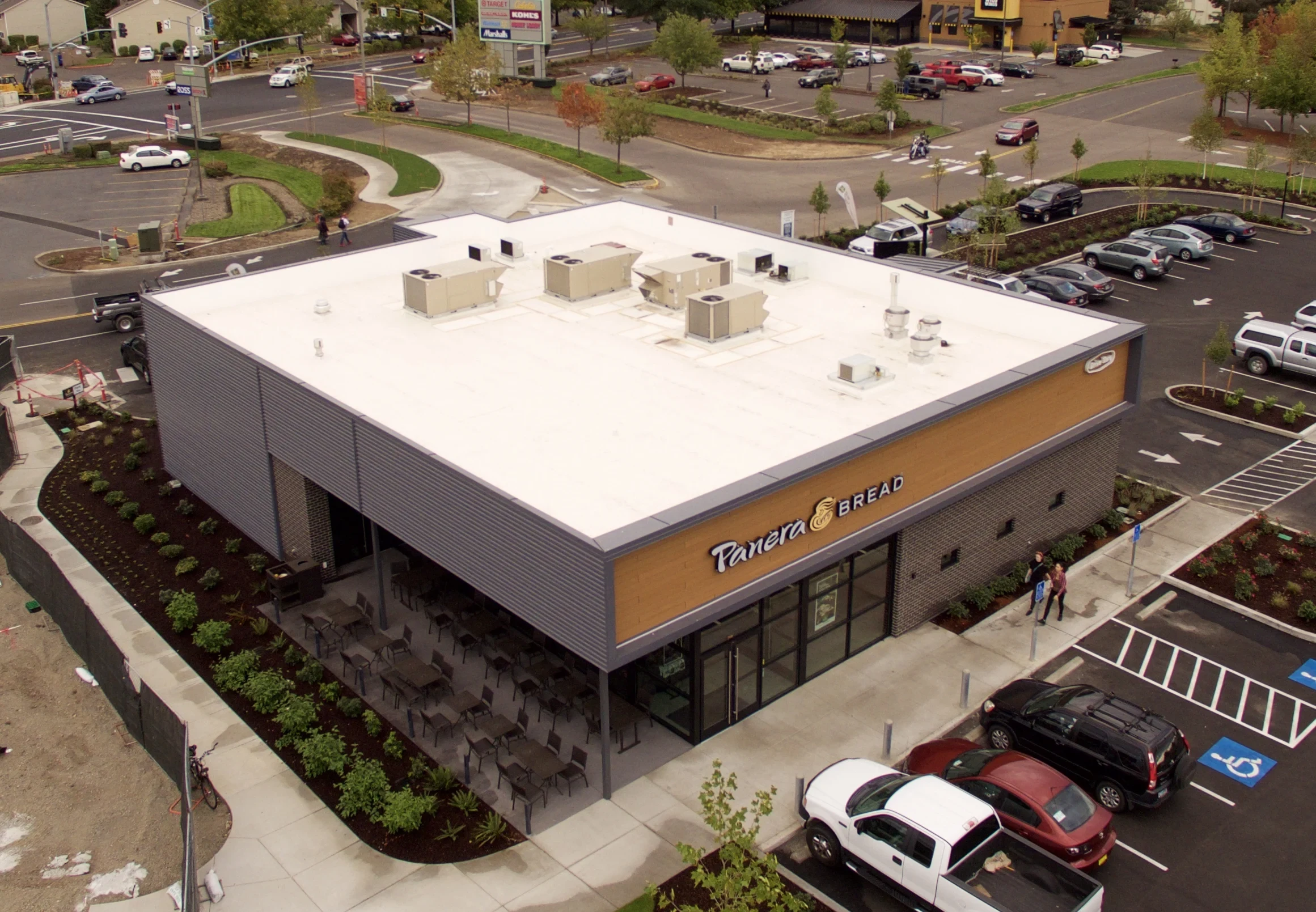
Fort Smith summers run hot and humid, and a white or light-gray TPO membrane keeps rooftop temperatures well below what a dark modified bitumen surface reaches. That matters for HVAC load on a distribution building where the rooftop units are already running hard, and it slows the long-term UV breakdown that eventually turns a membrane brittle.
The tradeoff is thickness and reinforcement quality. Thin, low-cost TPO can shrink over time and pull at penetrations, which is a common failure mode we see on buildings that were reroofed on a tight budget a decade ago.
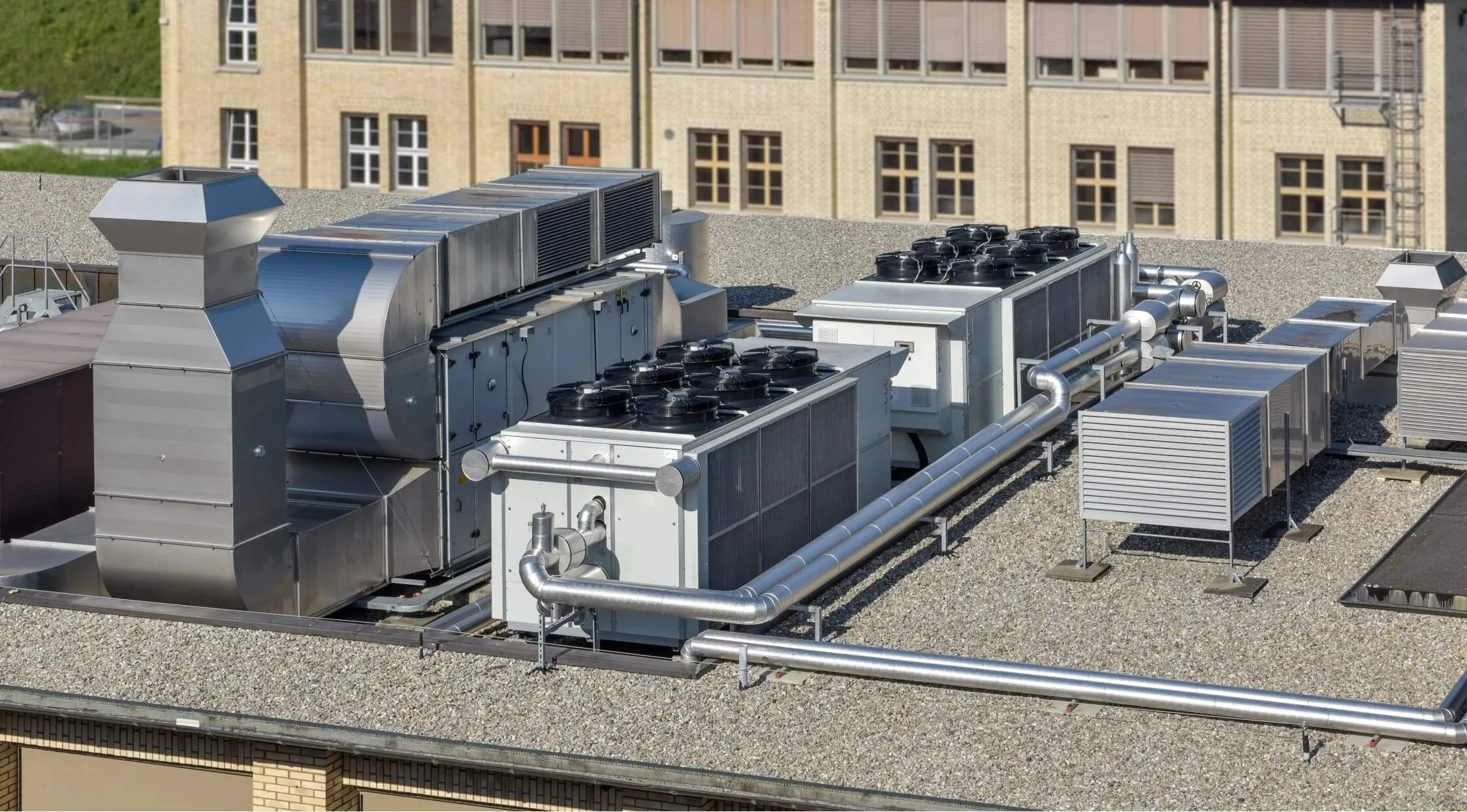
We also see this play out differently building to building , a single-story warehouse box with limited rooftop equipment ages differently than a distribution center packed with condensing units and exhaust curbs, where foot traffic and penetration density push wear well past what the open field membrane experiences on its own.
Sizing the Membrane for Wind Uplift
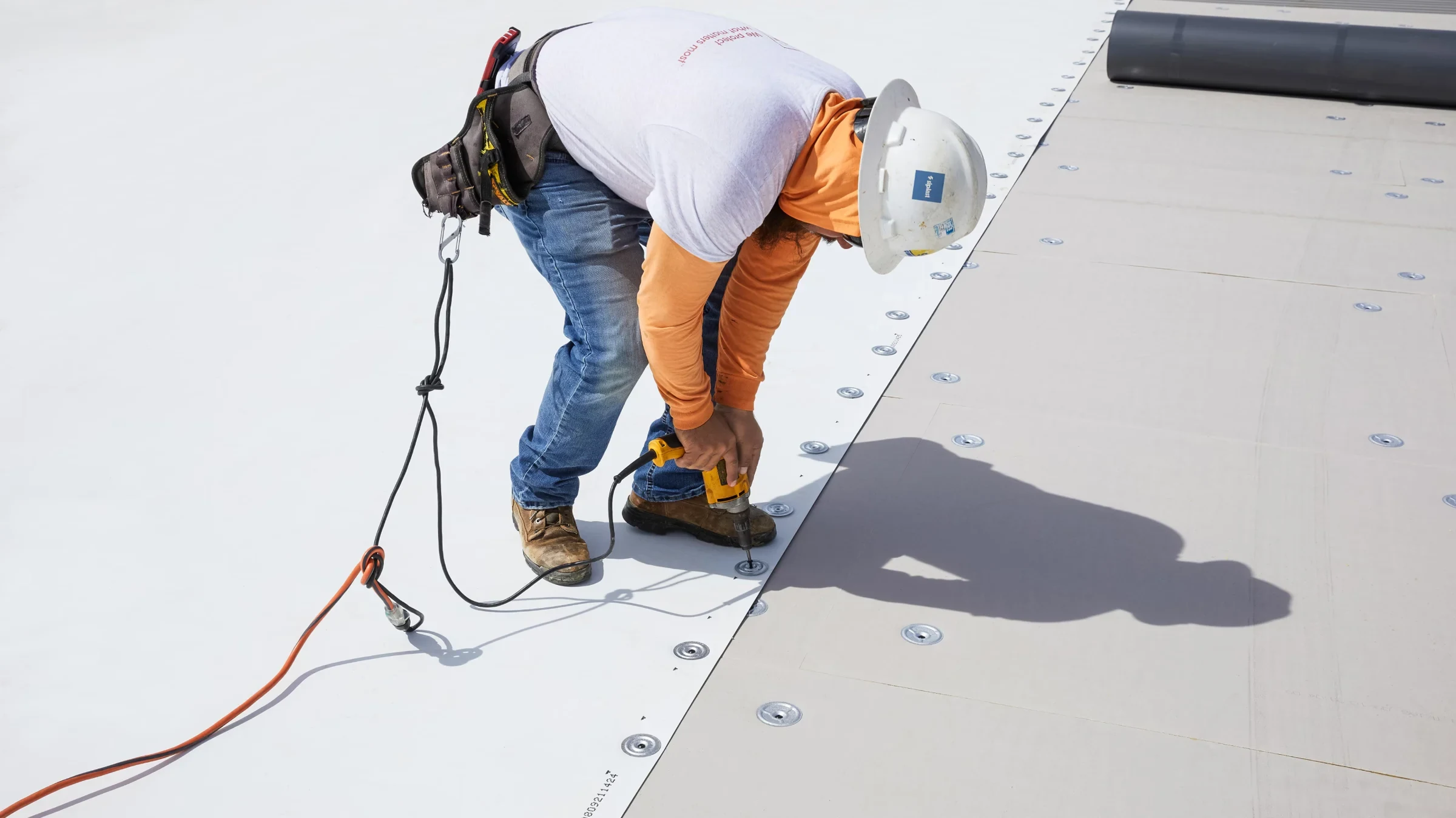
We're on the edge of tornado alley, and spring straight-line wind events push real uplift pressure on a flat roof, especially at corners and perimeters. Membrane thickness (60 mil versus 80 mil), attachment method, and fastening pattern all get calculated against the building's height, exposure, and roof zone , not picked off a standard spec sheet.
On taller warehouse and distribution buildings near the rail and highway corridors, we typically tighten the fastening pattern at corners and perimeters well beyond the field pattern, because that's where wind failures start.
Seam Welding Is Where Failures Start
TPO seams are hot-air welded, and weld quality is the single biggest variable in how long a TPO roof lasts. We probe test cuts on every seam during installation, not only a sample at the end, because a cold weld can look fine visually and still fail under the first hard wind.
On large distribution roofs where a crew might weld thousands of linear feet in a week, consistent welder settings and probe testing catch problems before the membrane is covered by rooftop equipment and walk pads.
Detailing Around Rooftop Equipment
Distribution and manufacturing roofs carry a lot of curbs, condensing units, and exhaust penetrations, and that's where most TPO leaks actually originate , not in the open field. We prioritize flashing detail at every curb and pipe boot, with:
- Factory-fabricated corner and T-joint patches instead of field-cut pieces
- Reinforced pipe boots rated for the specific pipe diameter, not a universal boot stretched to fit
- Curb flashing wrapped and welded, not only sealant-dependent
- Walk pads at every service path to mechanical units
- Termination bar and counterflashing at every parapet and wall transition
Maintenance That Extends the Roof
A TPO roof with a documented twice-yearly inspection almost always outlasts one that only gets looked at after a leak shows up inside the building. We check seam integrity, look for foot-traffic damage near mechanical units, and clear drains before spring storm season and again before winter.
For buildings under our maintenance program we track findings from one visit to the next, so a small seam separation gets caught and welded shut before it becomes an interior leak claim.
What Drives the Cost on a TPO Reroof
Membrane thickness, insulation upgrade requirements, and whether the deck qualifies for recover or needs a full tear-off account for most of the price spread between TPO bids. On a large distribution roof, crew mobilization and the number of penetrations to detail also add up quickly, which is why two bids on the same building can differ by a wide margin depending on what's actually included.
We itemize the scope by category , membrane, insulation, flashing, and tear-off or recover labor , so an owner comparing bids can see where the numbers diverge instead of comparing two lump-sum totals that may not cover the same work.
Common TPO Questions From Fort Smith Building Owners
How long does a TPO roof last in this climate?
Membrane life depends heavily on thickness, weld quality, and UV exposure. A properly detailed, adequately reinforced TPO system holds up well against our summer heat and spring wind, but we don't quote a blanket lifespan without seeing the specific building. Foot traffic and rooftop equipment density also factor into how a specific roof ages compared to a lightly serviced one.
Can TPO be installed over an existing roof?
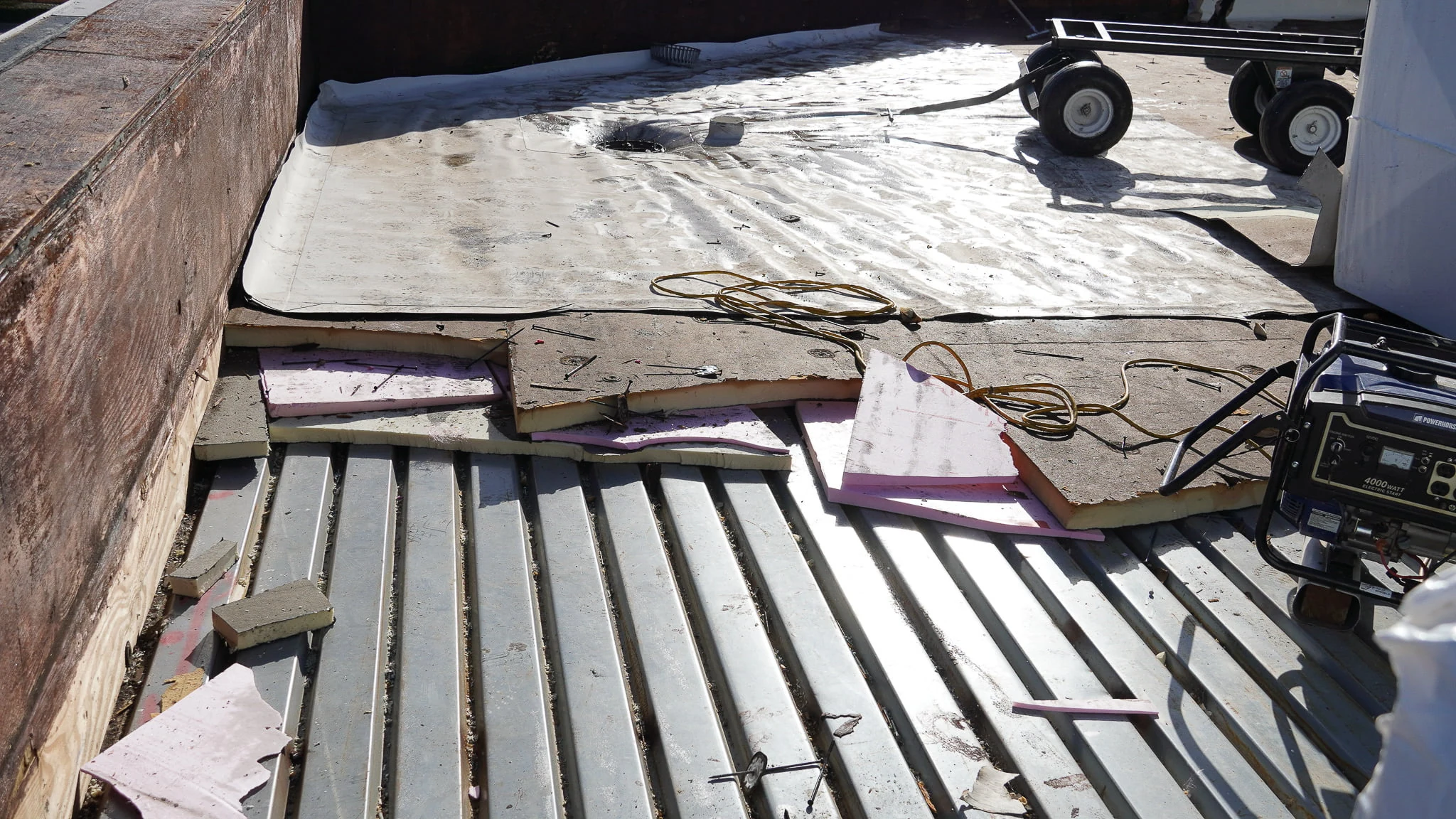
Sometimes, if the existing system is dry, adequately attached, and within code's layer limit. We check the existing roof's condition and insulation before recommending recover over tear-off.
Does TPO handle hail impact?
TPO resists hail reasonably well compared to some coatings, but severe hail can still bruise the membrane or damage rooftop equipment. We inspect after any significant hail event.
What causes most TPO leaks you find?
Failed flashing at penetrations and equipment curbs, not the open field membrane. That's why we spend disproportionate time on detail work around rooftop units.
Do you offer manufacturer warranties on TPO installs?
Warranty terms and eligibility depend on the manufacturer and the specific installation. We'll walk through what applies to your building before the project starts.