White EPDM for Buildings That Want Both Flexibility and Reflectivity
White EPDM is a smaller share of what we install compared to black EPDM or TPO, but it fills a specific gap: buildings that want the rubber membrane's flexibility against hail and thermal movement without taking on black membrane's summer heat gain. We see it most on office and light-industrial buildings around Fort Smith where cooling costs matter and the owner has already decided against a thermoplastic membrane.
Why Some Owners Choose White Over Black EPDM
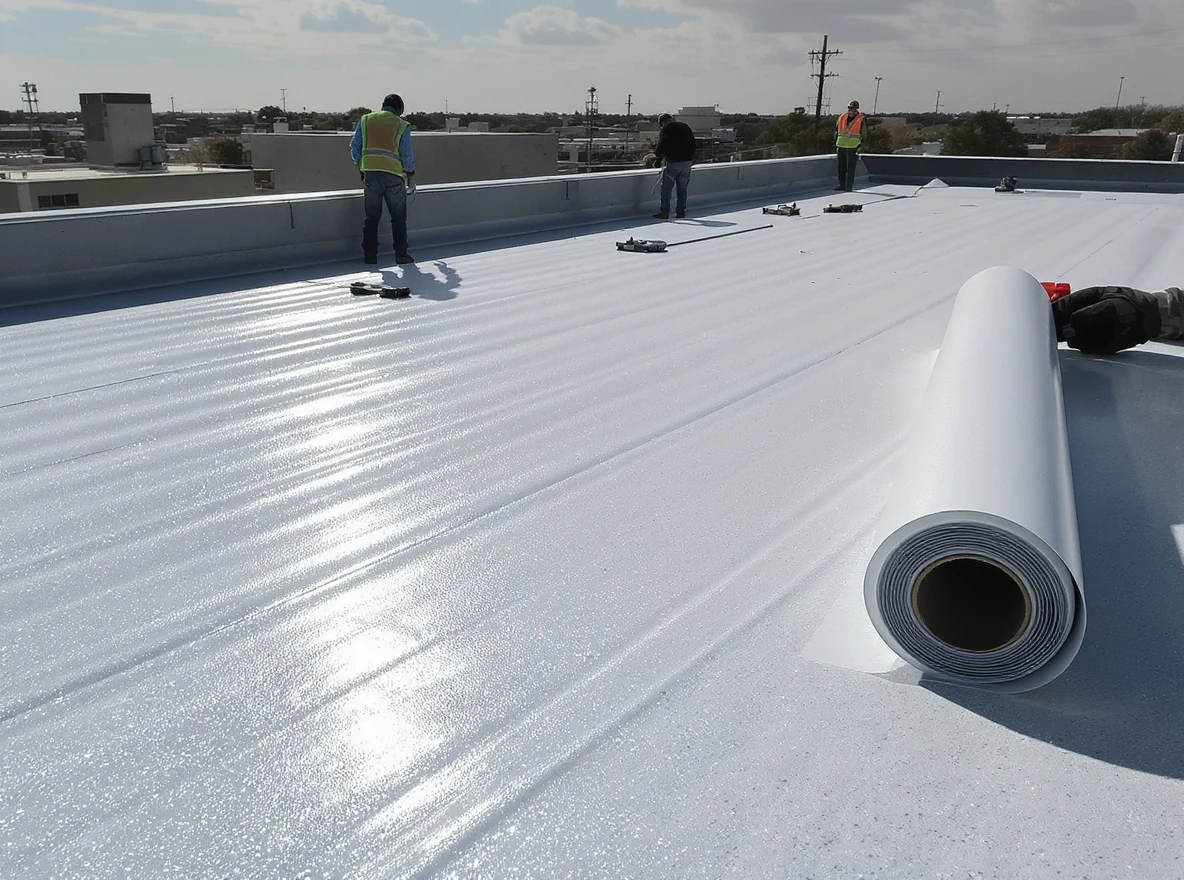
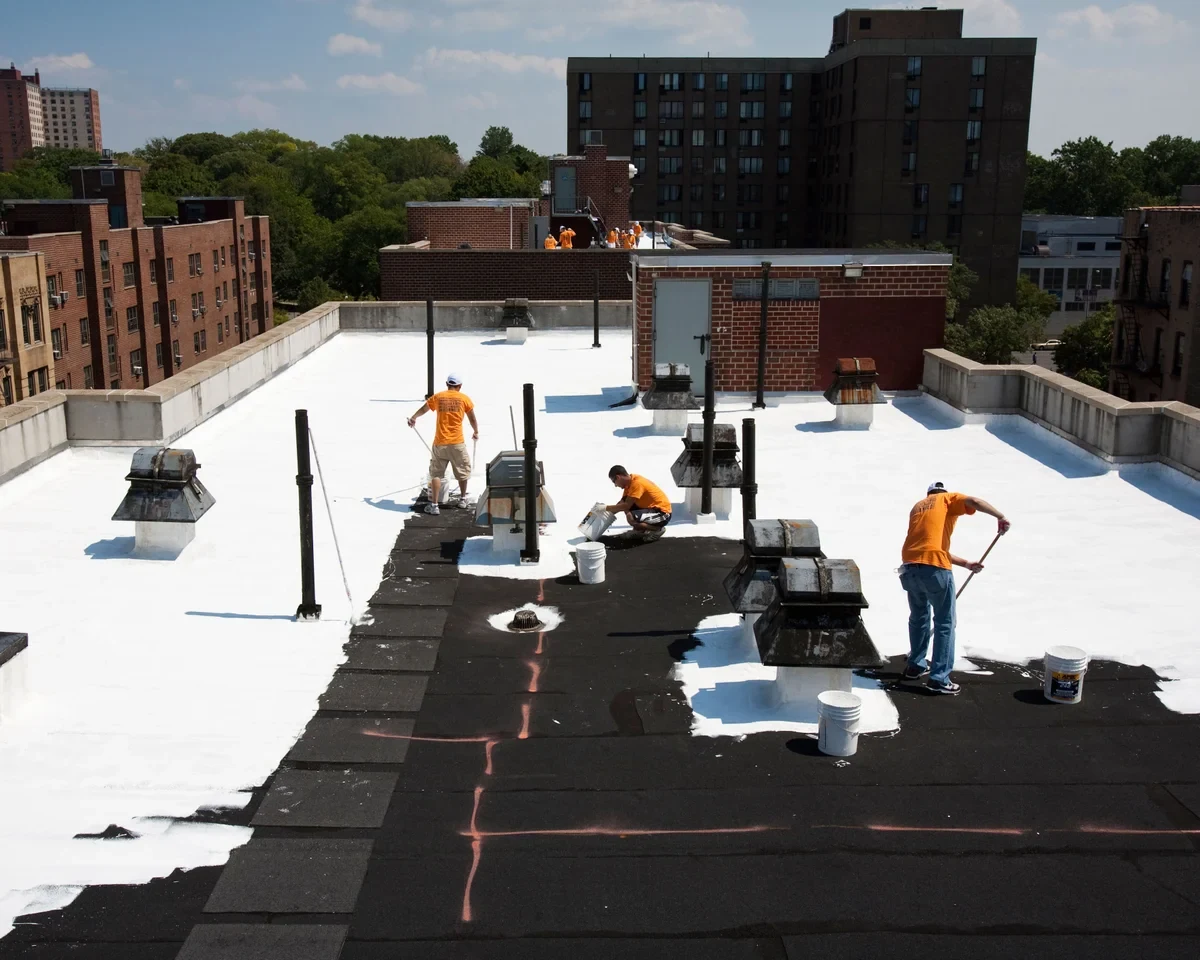
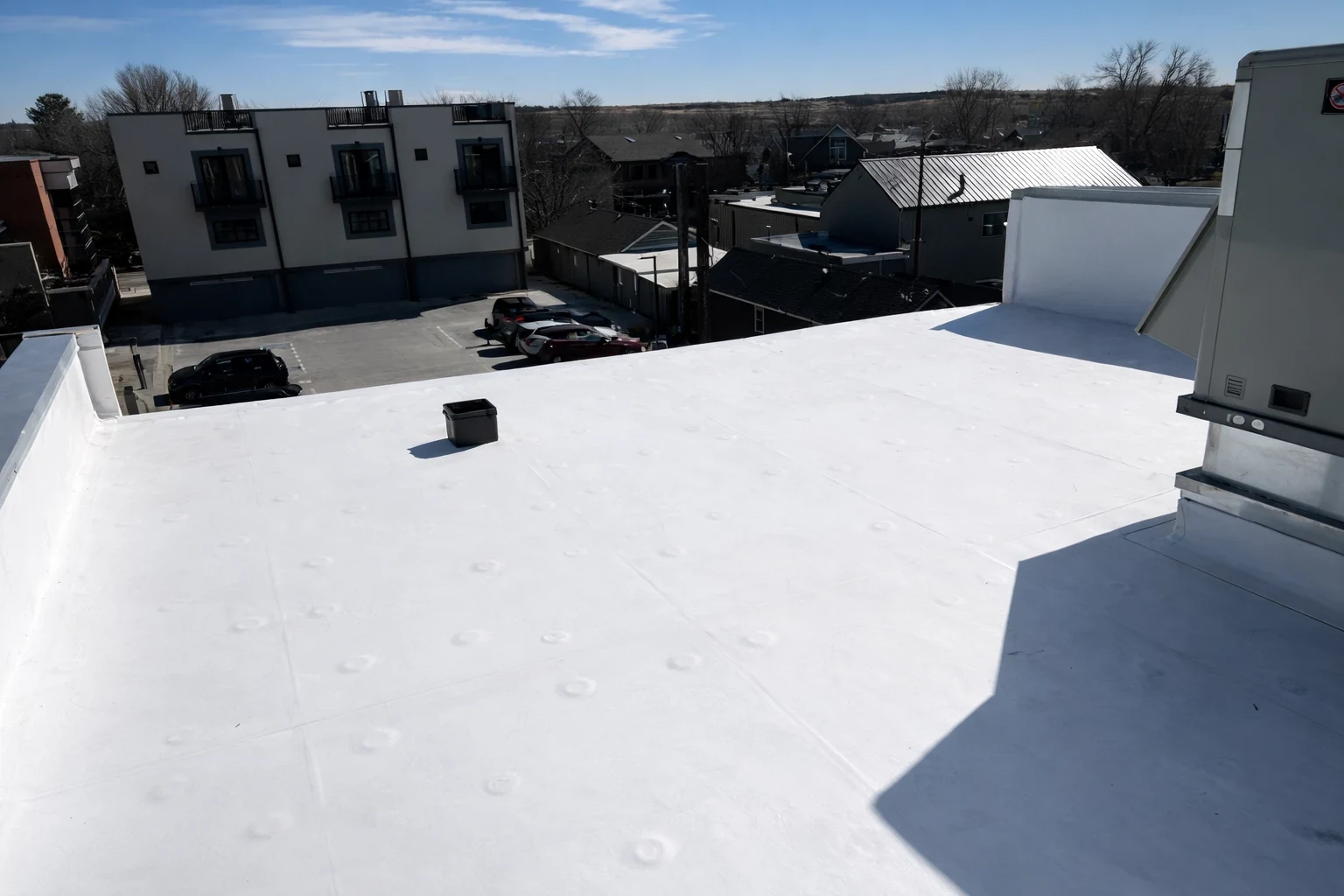
The membrane chemistry is the same synthetic rubber as black EPDM, but white EPDM has a white surface layer, either coextruded or applied, that reflects solar radiation instead of absorbing it. That drops rooftop surface temperature substantially compared to black EPDM through a Fort Smith summer, which reduces cooling load on the building below and reduces thermal cycling stress on the membrane and seams over time.
The tradeoff is cost , white EPDM typically runs more than standard black EPDM , and the white surface can show dirt and staining more visibly, particularly near industrial areas with more airborne particulate. On buildings near manufacturing operations by Chaffee Crossing, we discuss that staining tradeoff honestly before recommending white EPDM.
Hail Impact Behavior
White EPDM shares black EPDM's flexible rubber base, so it responds to hail impact the same way , flexing and rebounding rather than cracking outright the way a more rigid membrane can. The white surface layer itself does not change the impact resistance meaningfully; the thickness and quality of the underlying rubber sheet is what matters most. We spec 60-mil white EPDM on buildings with real hail exposure rather than defaulting to 45-mil. On roofs that have already taken a hail claim on a thinner sheet, moving to 60-mil at replacement time is a reasonable response that we discuss plainly with the owner rather than assuming they want the cheaper option again.
Wind Uplift and Attachment
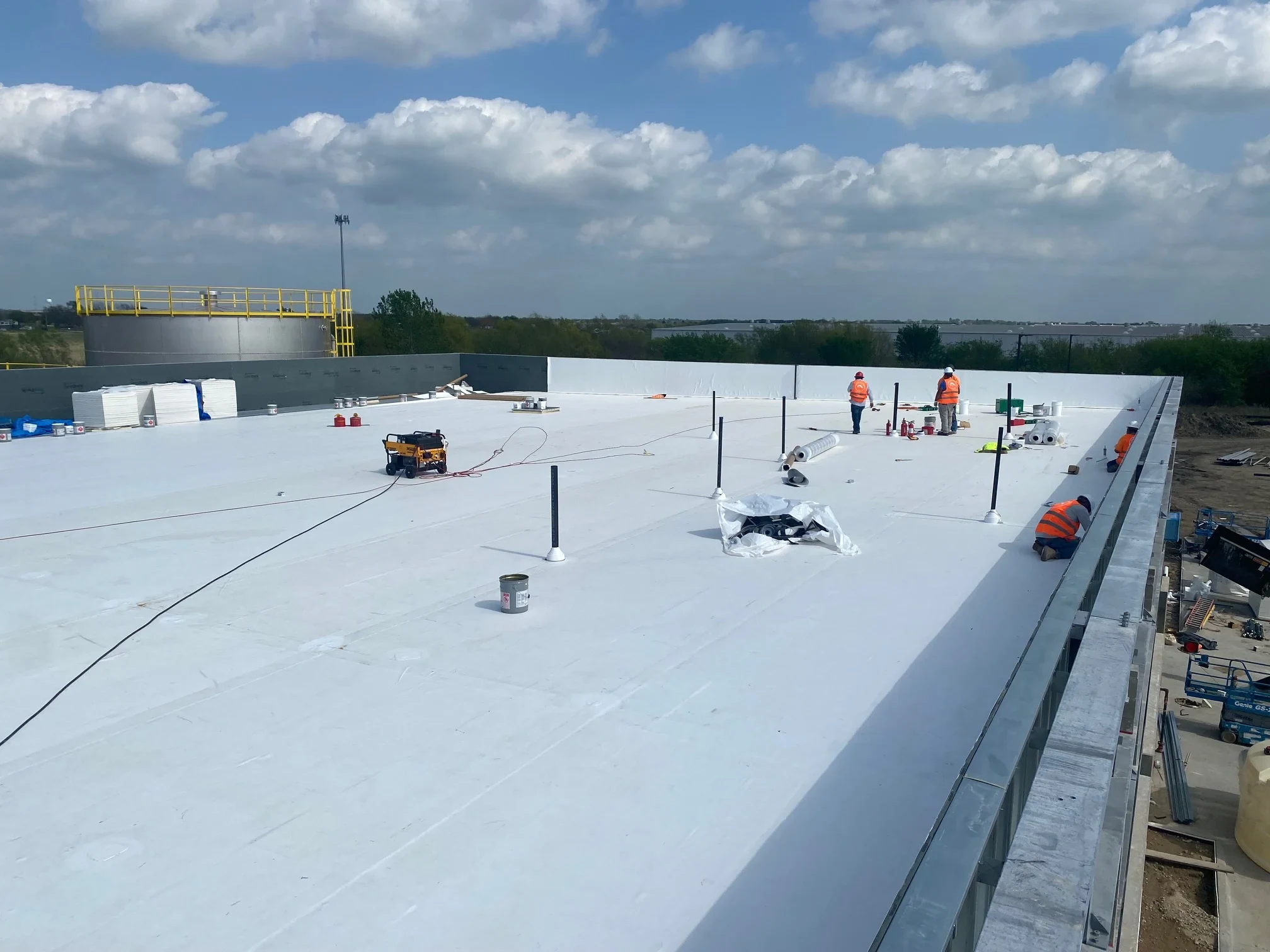
Same as black EPDM, white EPDM comes in mechanically attached, fully adhered, and ballasted configurations. Given how close Fort Smith sits to the tornado-alley wind corridor, we steer most commercial jobs toward mechanically attached or fully adhered systems rather than ballasted roofs, because loose ballast stone becomes a wind-debris hazard in severe thunderstorm winds. We engineer the fastening pattern to the building's specific height and exposure category rather than applying a blanket spec.
- White-surfaced EPDM membrane, typically 45-mil or 60-mil
- Mechanically attached or fully adhered systems favored over loose ballast
- Reflective surface to reduce summer rooftop heat load
- Current-generation seam tape at all field and flashing seams
- Reinforced detailing at penetrations, curbs, and parapets
- Suited to buildings prioritizing both flexibility and cooling-load reduction
Humidity and Summer Performance
Fort Smith's humid summer heat is exactly the condition white EPDM is designed to handle better than its black counterpart. Lower surface temperature means less thermal expansion and contraction cycling day to day, which in turn means less stress accumulating at seams and flashing details over a multi-year service life. We still recommend annual seam inspection regardless of membrane color, because seam integrity depends more on installation quality and maintenance than on surface reflectivity.
Ice-Storm and Cold-Weather Loading
White EPDM retains the same cold-weather flexibility as black EPDM, which helps it tolerate the freeze-thaw movement that occasional western Arkansas ice storms cause at drains and low points. We detail drainage carefully on any EPDM roof, white or black, since ponded water sitting against a seam is a bigger long-term risk than the membrane color.
Where It Fits in This Market
We recommend white EPDM most often for office buildings, medical buildings, and light-industrial buildings where cooling cost matters and the owner wants rubber's flexibility rather than a thermoplastic membrane's harder surface. Medical office buildings around Fort Smith with sensitive rooftop HVAC equipment are a good example , lower rooftop surface temperature reduces the heat load those units have to work against on the hottest summer afternoons, which can measurably extend equipment service life alongside the roof membrane itself. For heavy-traffic distribution and manufacturing roofs, we generally lead with TPO or black EPDM depending on budget, but white EPDM stays on the table when a building's HVAC load or aesthetic preference calls for a reflective surface.
Questions About White EPDM
Does white EPDM cost more than black EPDM?
Yes, typically. The white surface treatment adds cost over standard black EPDM, though it usually costs less than a comparable TPO system.
Will the white surface stay reflective over time?
Reflectivity does decline gradually with dirt accumulation and weathering, which is true of any white roofing membrane. Periodic cleaning can help restore some reflectivity, though we do not promise a specific reflectivity retention figure.
Is white EPDM as hail-resistant as black EPDM?
The underlying rubber sheet provides the impact resistance in both cases; the white surface layer does not meaningfully change hail performance. Sheet thickness matters more than color for hail resistance.
Can white EPDM be installed over an existing black EPDM roof?
Only after we inspect the existing deck, insulation, and membrane condition. Wet insulation or a failing existing membrane usually means tear-off rather than recover, regardless of the new membrane's color.
Does white EPDM need different maintenance than black EPDM?
Not structurally, though the white surface shows dirt and staining more visibly, so owners who want the roof to look clean may want more frequent surface cleaning. Seam and flashing inspection schedules are the same for both colors.