Snow and Ice Roof Damage Insurance Claims in Fort Smith, AR
Fort Smith doesn't see snow and ice every winter the way northern markets do, which is part of what makes an ice storm here more damaging when one does arrive: roofs, drains, and rooftop equipment aren't engineered for routine heavy ice loading the way they might be further north, and an infrequent event can still catch a building owner off guard. Ice damage claims tend to hinge on drainage evidence more than the field membrane itself, which is a different documentation approach than a hail or wind claim.
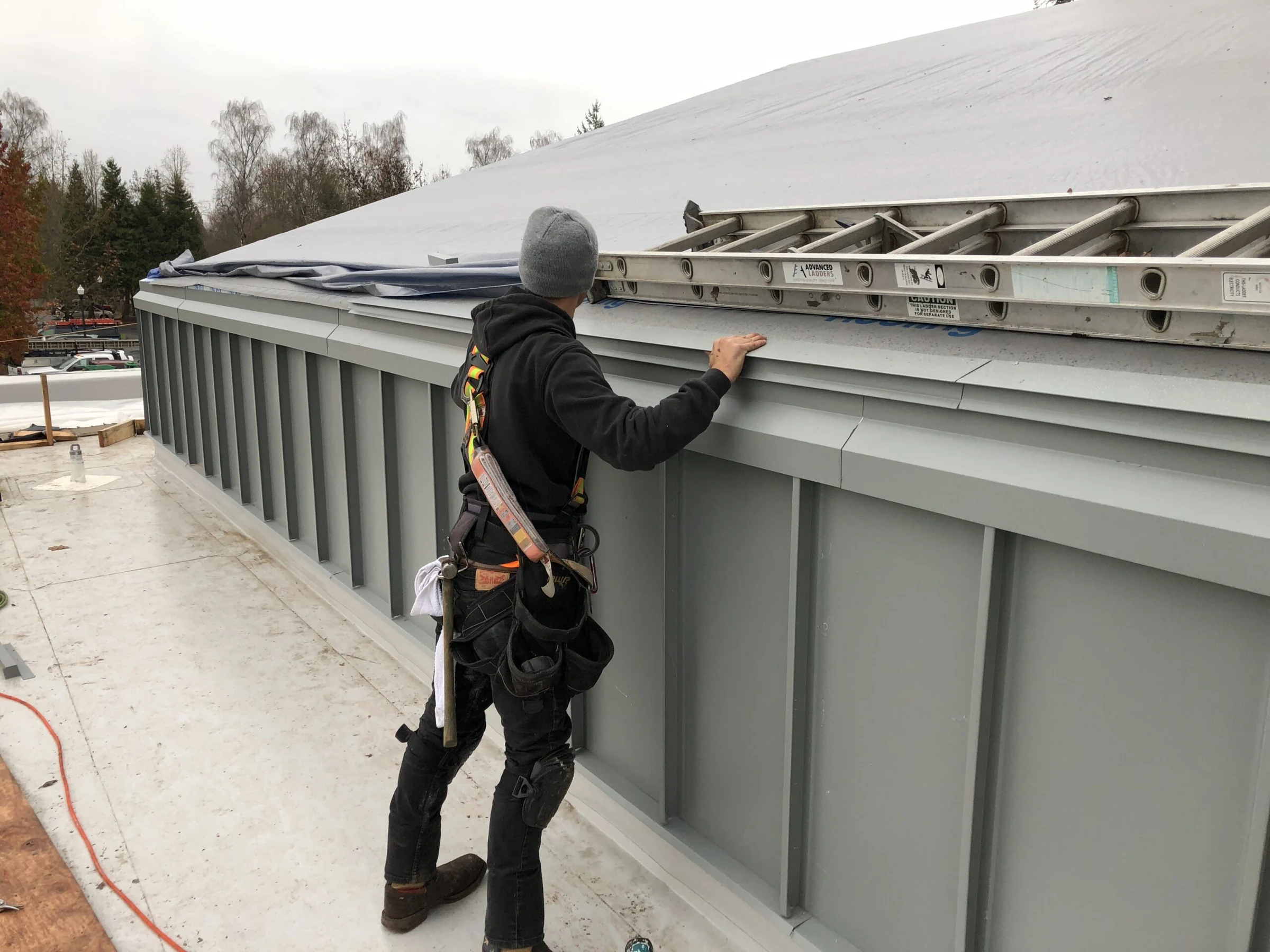
We document ice and snow damage as your roofing contractor, not a public adjuster. We inspect the roof and drainage system and record what we find so the claim reflects the true scope , we don't file the claim or negotiate the payout.
How Ice Storms Actually Damage a Low-Slope Roof
Ice accumulation adds real weight loading to a roof structure, and that load doesn't distribute evenly. It concentrates at low points, valleys, and areas around rooftop equipment where ice tends to build up and linger longest. Beyond structural load, ice can crack or stress equipment curbs, gutters, and downspouts as it expands, and ice damming at drains and low points can force water backward under seams that would otherwise shed normal precipitation without any issue.
Why Drainage Documentation Matters Most
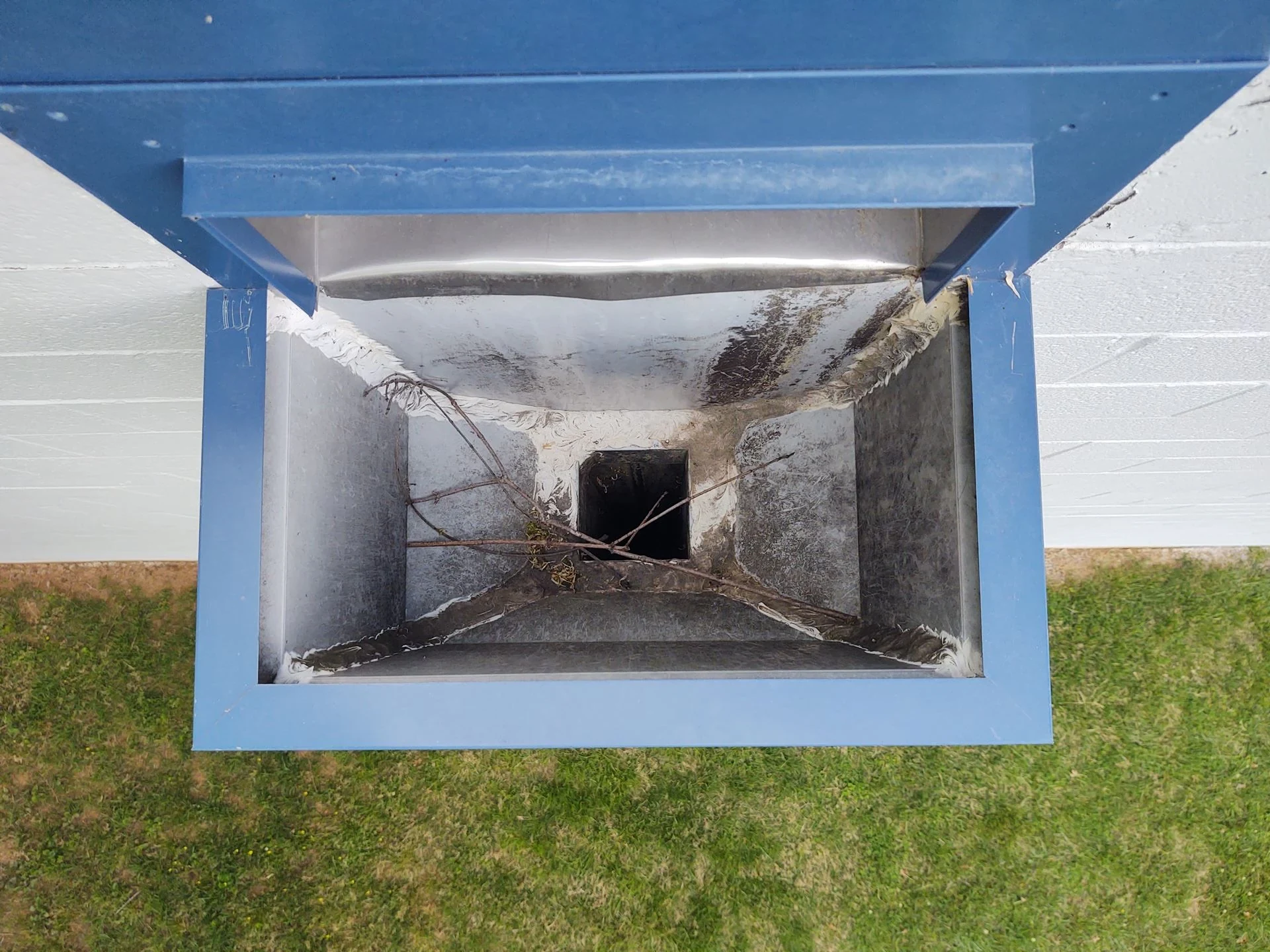
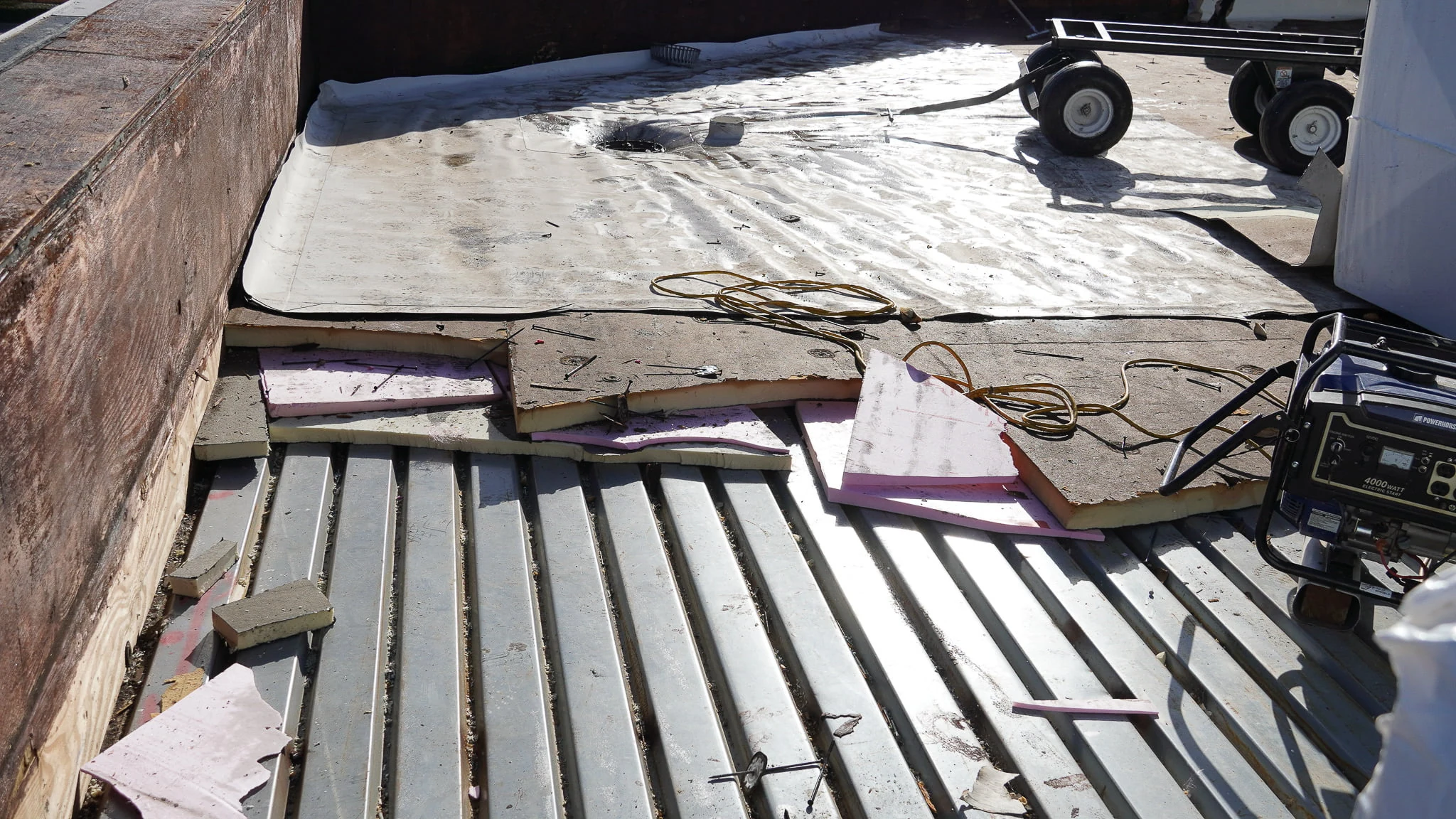
Unlike hail, which leaves impact marks across the open field of a roof, ice damage concentrates where water and ice collect: drains, scuppers, parapet returns, and equipment curbs. We inspect every drain and low point specifically after a significant ice event, checking for cracked components, displaced flashing at drain bowls, and membrane stress at the transition points where ice damming forced water backward. That drainage-focused documentation is what typically distinguishes a legitimate ice-storm claim from general wear.
Separating Ice Event Damage From Age-Related Ponding Wear
This is where ice claims get contested most often. A roof that already has mild ponding issues from age or a slightly out-of-level surface can show water staining or membrane softening that looks similar to fresh ice damage but actually predates the storm. We look for specific indicators of an acute event , cracked components, fresh displacement, and damage patterns consistent with the ice accumulation locations from that particular storm , rather than treating every drainage issue on an older roof as storm-caused. Where the distinction is genuinely close, we document it honestly and note the ambiguity rather than overstating the claim.
Timing and the Freeze-Thaw Cycle
Ice damage isn't always immediately obvious. A drain that took on stress during an ice event might not show a full failure until several freeze-thaw cycles later, when the initial crack has had time to widen. We recommend inspecting the drainage system as soon as it's safe to access the roof after any significant ice event, and again once temperatures warm and any deferred damage has had a chance to show itself, since a single post-storm inspection can miss damage that develops over the following weeks.
Fort Smith's Ice Exposure by Building Type
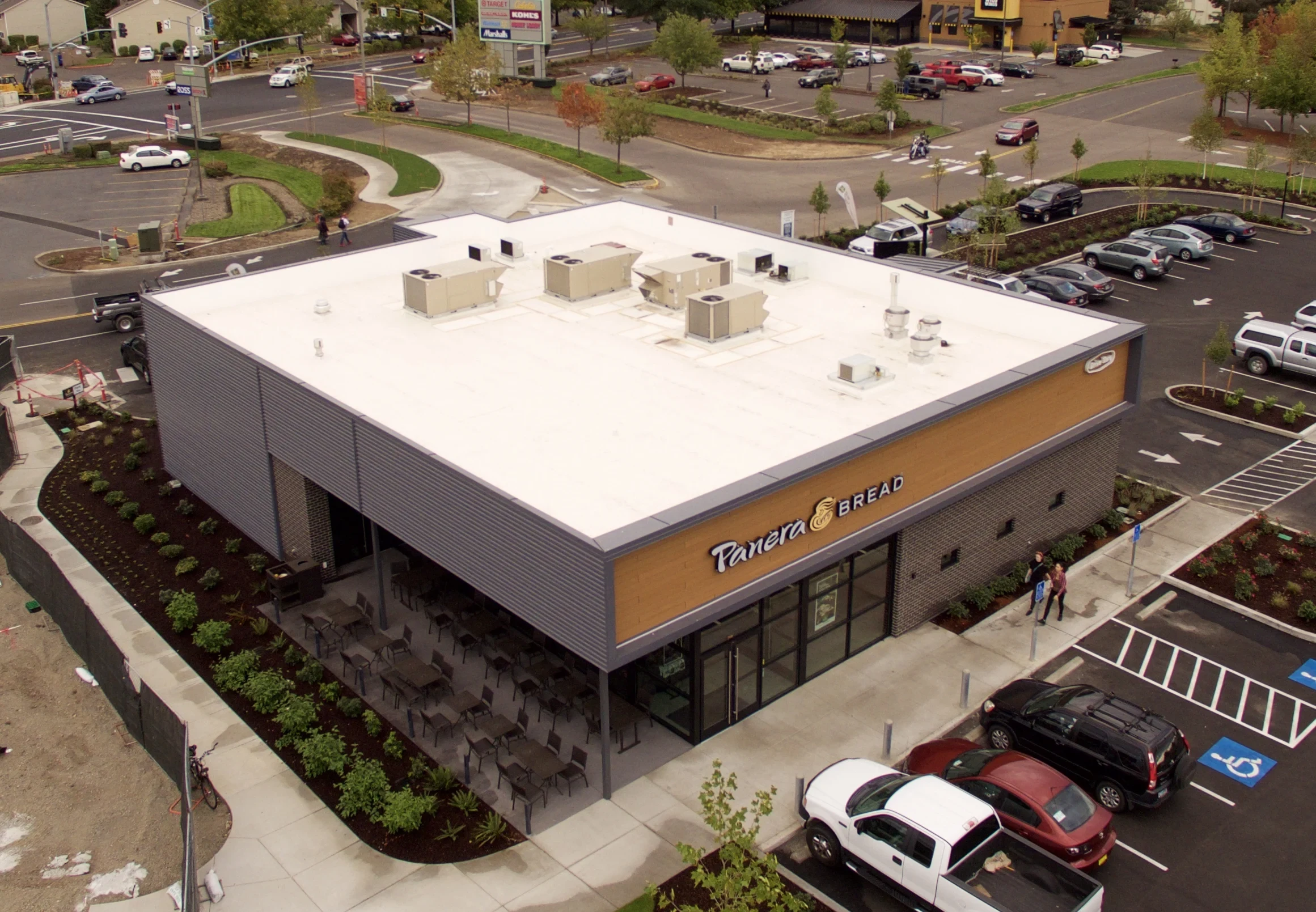
The manufacturing buildings around the Fort Chaffee redevelopment often carry rooftop equipment installed at different times, which means curb and equipment penetration details vary across a single roof and each needs to be checked individually after an ice event. The distribution buildings near the I-40/I-49 junction have large roof areas with correspondingly more drains and scuppers, so a full drainage inventory matters more there than on a smaller building. Older river-port industrial roofs along the Arkansas River sometimes have drainage systems that were adequate when installed but are now undersized or partially blocked by age, which is exactly the kind of pre-existing condition we document separately from acute ice-storm damage so the claim reflects what the storm actually caused.
Snow and Ice Damage Claim Questions
How does ice storm damage differ from wind or hail damage for claim purposes?
Ice damage tends to concentrate at drains, low points, and equipment curbs rather than across the open field of the roof, and it develops from weight loading and ice damming rather than direct impact.
Can ice damage show up weeks after the storm?
Yes. A drain or curb that took on stress during an ice event may not fully fail until later freeze-thaw cycles widen the initial damage, which is why a follow-up inspection matters after an ice event.
How do you tell ice storm damage from ordinary ponding wear?
We look for indicators of an acute event, like fresh cracking or displacement at drainage components, and compare damage locations against where ice actually accumulated during the storm. Long-standing ponding wear tends to look and behave differently.
Do you inspect the drains and downspouts, or just the membrane?
Both. Ice damage claims usually depend more on drainage system documentation than on the field membrane itself, so we treat the drainage inventory as a core part of the inspection, not an afterthought.
Is ice damage typically covered by commercial property insurance?
That depends on your specific policy and the cause of loss. We document what we find factually; whether a given ice event is a covered loss is determined by your insurer based on your policy terms.