Perimeter Details That Decide How a Fort Smith Roof Handles Wind
Most roof failures do not start in the middle of the field. They start at the edge, where wind pressure is highest and where metal terminations, coping caps, and gutters take the brunt of every storm that comes through. These are small components on a roof plan but they carry an outsized share of the failure risk, especially in a wind and hail corridor like this one.
Why Edge Metal Fails First in a Wind Event
Wind does not push evenly across a roof. Pressure concentrates at corners and edges, sometimes at several times the force felt across the open field, which is why edge metal and perimeter fastening patterns matter more here than almost any other detail on the roof. Edge metal that was installed to older or minimal fastening standards is often the first thing to lift in a straight-line wind event, and once it lifts even slightly, wind can get underneath the membrane termination and start peeling the field from the perimeter inward.
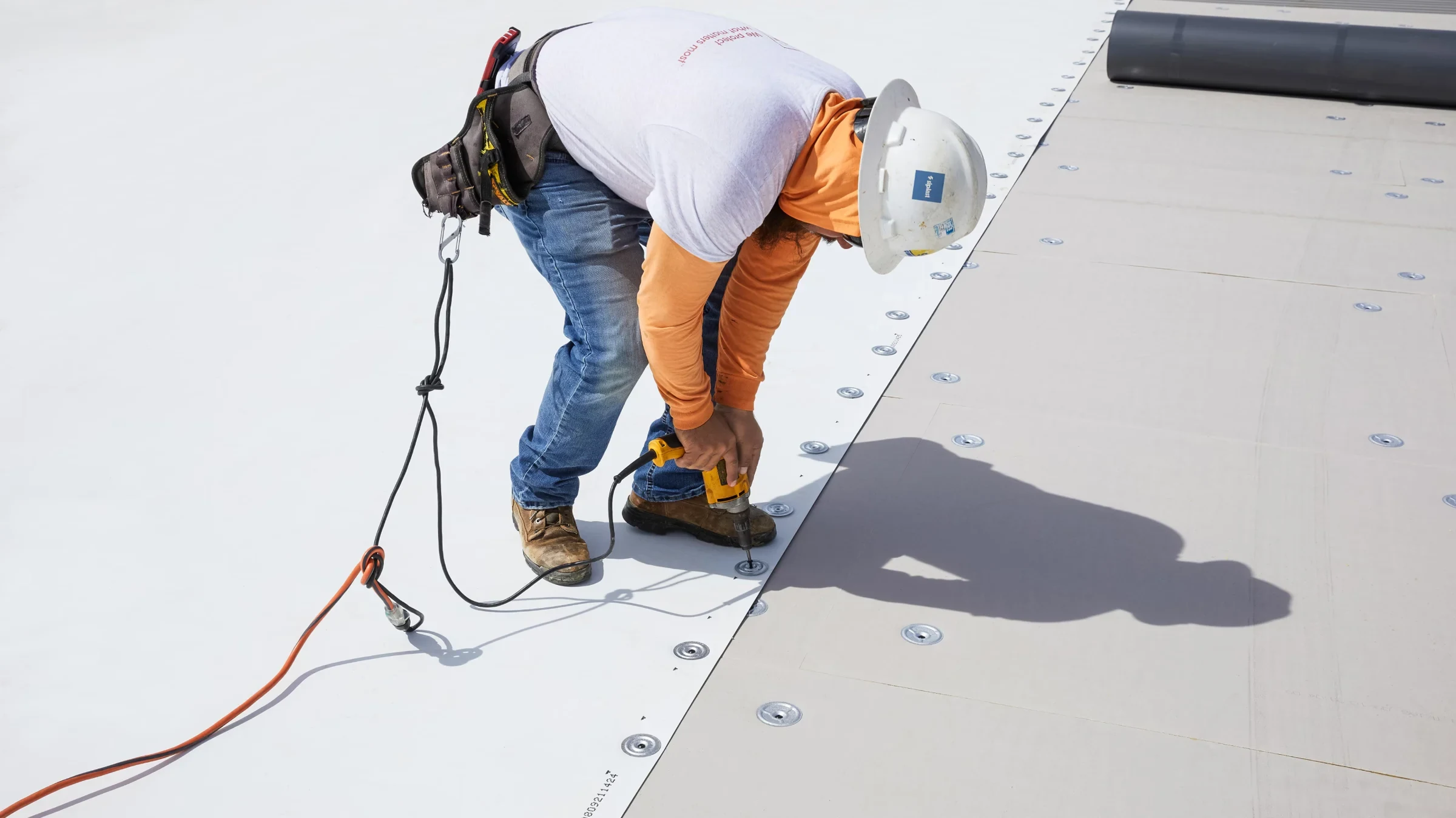
We check edge metal fastening spacing against current wind uplift standards during inspections rather than simply confirming the metal is still attached. A cap that looks fine from the ground can still be under-fastened for the wind exposure this building actually sees.
Parapet Coping: A Common Weak Point
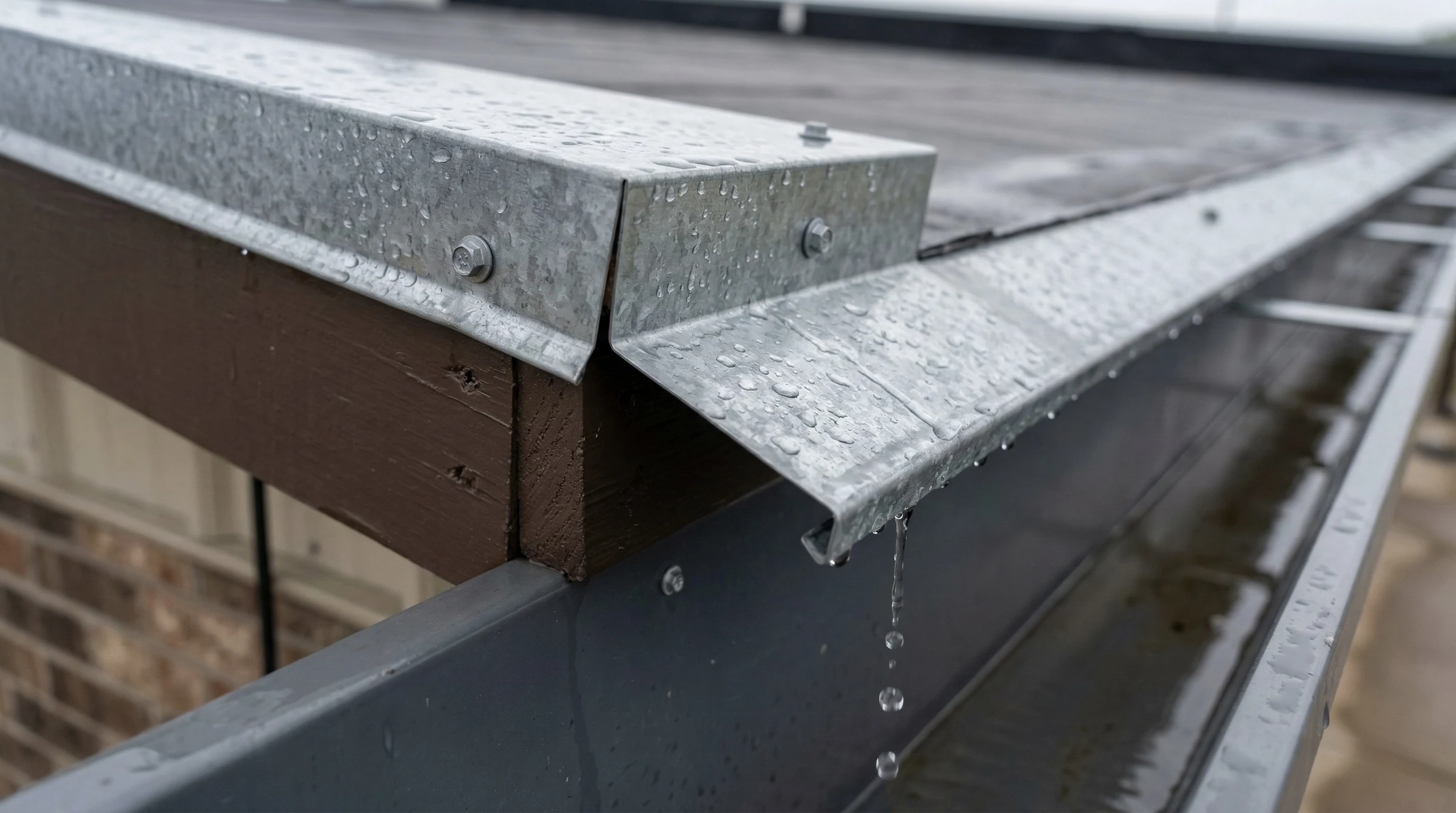
Coping caps on parapet walls take direct wind pressure and, over time, thermal expansion and contraction can work joints loose even without a major storm event. A gap in a coping joint lets water behind the wall face, which shows up eventually as staining or deterioration on the interior side of the parapet, sometimes long before anyone notices a roof leak. We check coping joints, end caps, and cleats specifically, since these are easy to overlook during a general roof walk.
Gutters and Downspouts: Sloped-Roof and Transition Areas
Buildings with sloped roof sections or transitions between low-slope and pitched roofing often route water through conventional gutters and downspouts, and these are vulnerable to a different set of problems: debris accumulation, ice damming in winter, and fasteners pulling loose from fascia over time. A clogged or misaligned gutter during a heavy spring downpour can overflow directly against a wall or foundation, and during winter, ice buildup in a gutter can add enough weight to pull the whole run loose from its brackets.
Ice Storm Stress on Perimeter Details
Ice accumulation adds direct weight loading to edge metal, coping, and gutter systems, and repeated freeze-thaw cycling through a typical Arkansas winter stresses fastener holes and sealant joints over multiple seasons. We inspect these components specifically after ice events, since damage here often precedes a membrane leak by a full season or more.
Matching Repairs to the Existing System
Edge metal and coping repair work best when the new material matches the existing profile, gauge, and finish, both for weathertight performance and for the roof to read as one continuous system rather than a patchwork of mismatched sections. We source replacement metal to match existing profiles wherever possible, and where an exact match is not available, we fabricate to the closest practical profile so transitions stay clean.
On buildings with mixed roof ages, where an addition or expansion added a different edge detail years after the original construction, we flag those transition points specifically, since they are common locations for water intrusion where two systems meet.
We also check whether coping and edge metal fastener types are compatible with the roof membrane material at each termination, since dissimilar metals or improper sealant chemistry at these joints can cause corrosion or bond failure over time that would not otherwise be obvious from a visual walk. Getting this detail right at installation avoids a repeat repair call two or three years later once a slow-developing corrosion issue finally becomes visible.
What Perimeter Repair Work Covers
- Edge metal fastening inspection and reinforcement to current wind uplift standards
- Coping cap, joint, and cleat repair or replacement at parapet walls
- Gutter and downspout repair, including bracket reattachment and debris clearing
- Sealant renewal at coping joints and metal terminations
- Ice-damming risk assessment at gutters and low roof transitions
- Photo documentation of perimeter condition before and after repair
Edge Metal and Gutter Questions From Fort Smith Building Owners
How do I know if my edge metal fastening is adequate for wind exposure here?
An inspection checking fastener spacing against current wind uplift design standards is the only reliable way to know. Visual condition alone does not tell you whether the original installation meets today's fastening requirements.
Can a small gap in parapet coping really cause a leak?
Yes. Water working behind a parapet wall through a loose coping joint can travel down inside the wall cavity and show up as interior staining well below the roofline, sometimes far from the actual gap.
Why do gutters fail more in winter here?
Ice accumulation adds substantial weight to a gutter run, and freeze-thaw cycling stresses brackets and seams over repeated winters, which is why gutter failures often show up or worsen after an ice event.
Should edge metal be inspected separately from the rest of the roof?
It is worth specific attention during any inspection, since it is the highest wind-stress area on the roof and a common early failure point that general roof walks sometimes underweight.
Do you repair gutters on buildings with mostly low-slope roofing?
Yes, wherever a building has sloped transition sections, canopy overhangs, or pitched accessory roofs that route water through conventional gutter systems.