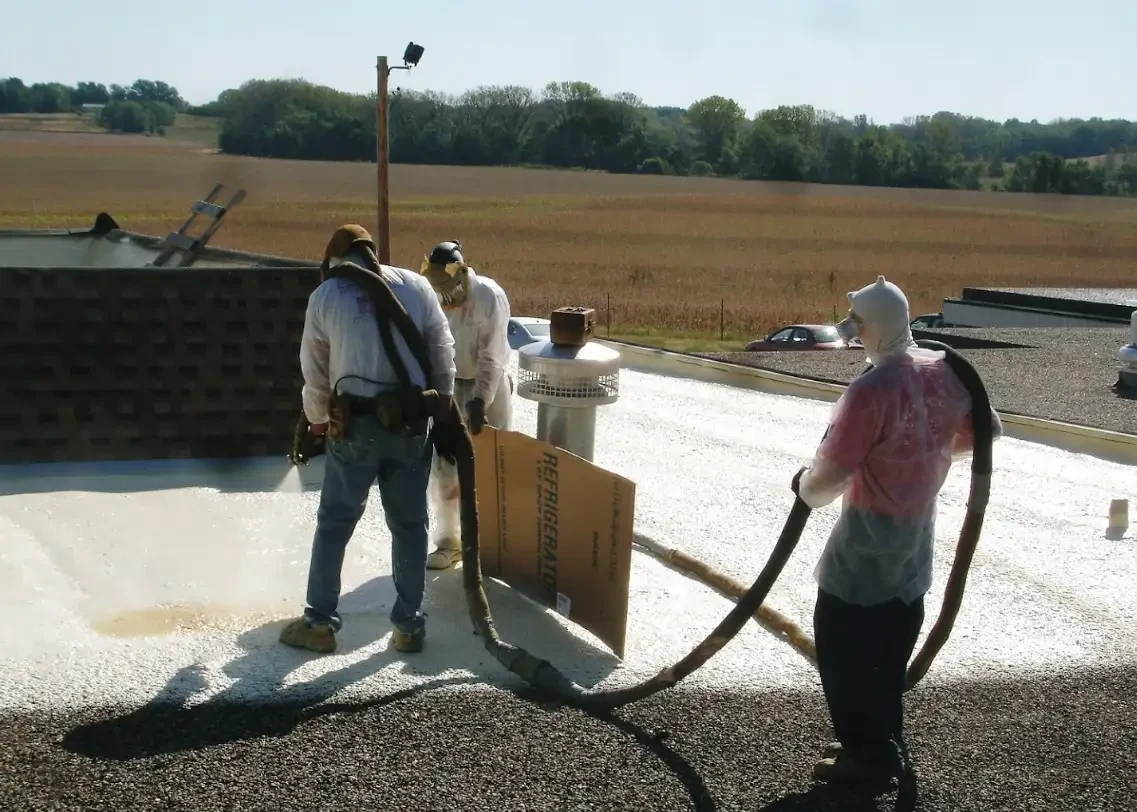
Spray Polyurethane Foam for Irregular Roofs and Drainage Problems
SPF is the roof system we bring up when a building has a drainage problem a flat membrane can't solve on its own, or a deck geometry , lots of curbs, penetrations, and irregular transitions , that makes a seamed membrane installation genuinely difficult. It is a specialty system, not a default recommendation, and it depends entirely on getting the application weather window and the protective coating right.
Solving Drainage With Foam Instead of Just Membrane
Spray foam is applied as a liquid that expands and cures in place, which means we can build slope directly into the roof surface during application rather than relying on tapered insulation boards alone. On older Fort Smith buildings, particularly around downtown and older sections of Van Buren, we regularly find flat or poorly sloped decks where standing water has been a chronic problem for years. Foam lets us correct that pitch as part of the install, directing water to drains instead of letting it pond indefinitely.
This matters more here than in a drier climate because ponded water sitting through Fort Smith's humid summer creates conditions for algae growth and accelerated membrane aging, and ponded water that freezes during an occasional winter ice event adds freeze-thaw stress at the pond's edges. Correcting slope at the source addresses both problems directly instead of just protecting against them.
Insulation Value Built Into the Roof
Foam is itself a high-performance insulator, so an SPF roof adds insulation value across the entire roof plane rather than only where a separate insulation board sits between deck and membrane. For manufacturing and distribution buildings managing heavy summer cooling loads, that continuous insulation layer with no thermal breaks at seams or fasteners can measurably reduce energy costs compared to a membrane system with mechanically fastened insulation board.
The Protective Coating Is Not Optional
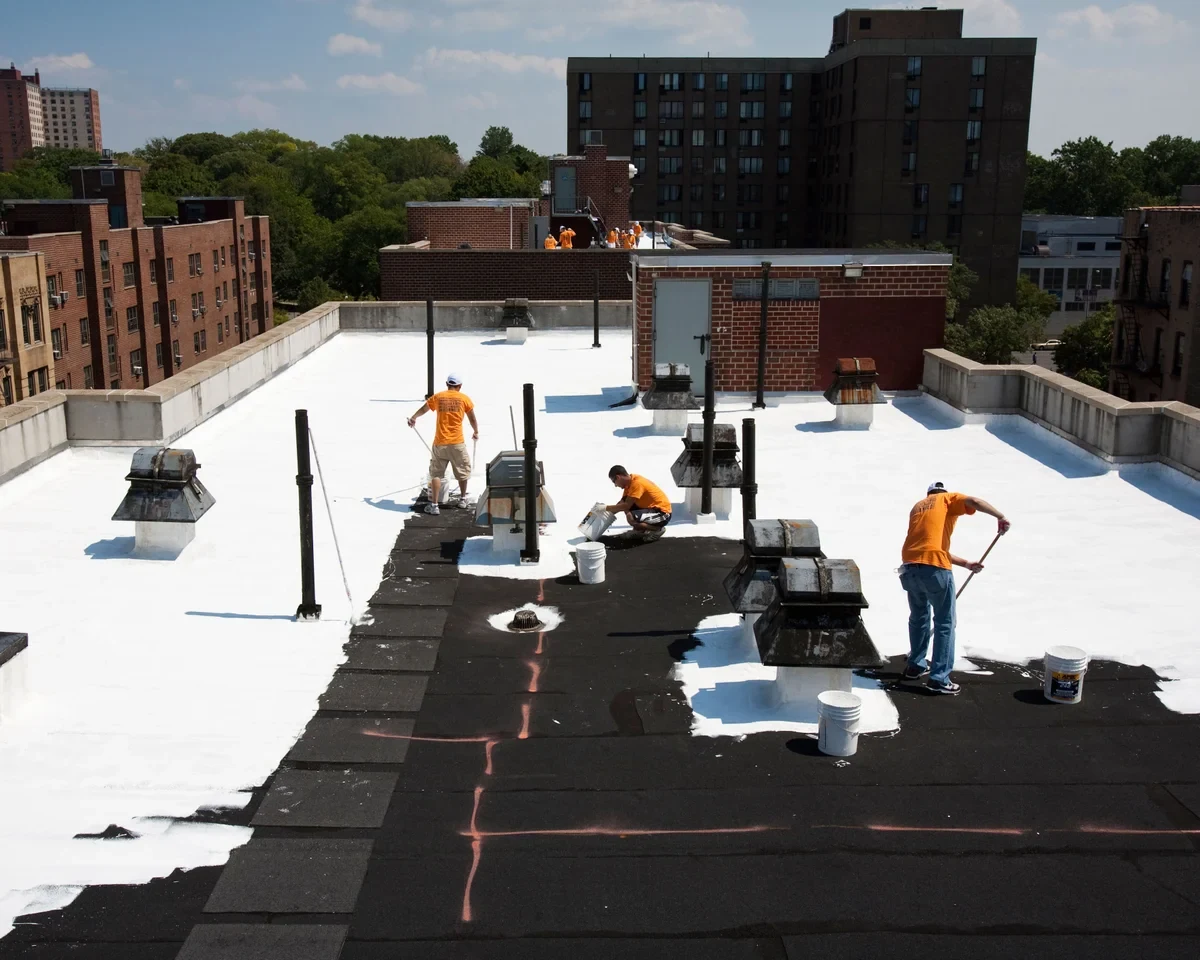
Foam itself is not UV-stable and must not be left exposed , every SPF roof gets a protective elastomeric coating, usually silicone or acrylic, applied over the cured foam. That coating is what actually faces the weather day to day: UV exposure, hail impact, and foot traffic all hit the coating first. We spec coating thickness and recoat schedules based on the building's specific exposure, and we tell owners upfront that SPF roofs need periodic recoating as routine maintenance, not an optional extra.
- Spray-applied foam builds slope directly into the roof surface
- Continuous insulation value with no thermal breaks at seams or fasteners
- Silicone or acrylic protective coating applied over all foam, no exceptions
- Joint-free application handles irregular decks, curbs, and penetrations well
- Suited to correcting chronic ponding on older, poorly sloped roofs
- Requires periodic recoat maintenance to stay watertight long term
Hail and Wind Considerations
Coated foam has reasonable impact resistance, but a granular hail event can still dent or damage the coating surface, and we inspect coated SPF roofs closely after any significant hail event since coating damage that goes unaddressed exposes the foam beneath to UV degradation faster than a membrane roof would show equivalent damage. On wind uplift, SPF's fully adhered, monolithic nature actually performs well , there are no mechanical fasteners or loose seams for wind to work against, which is a real advantage given how often western Arkansas sees severe thunderstorm wind events each spring.
Application Weather Window
Spray foam application is sensitive to temperature, humidity, and wind at the time of spraying , too much humidity or the wrong temperature range can affect cure quality and surface finish. Fort Smith's humid summer conditions mean we watch dew point and moisture closely and schedule spray days around forecasted windows rather than pushing through marginal conditions, since a poor application is much harder to fix after the fact than choosing a better day.
Where SPF Fits in This Market
We recommend SPF on buildings with genuine drainage problems, unusually irregular roof geometry, or where the added insulation value offsets a real energy cost concern. For a standard rectangular warehouse or distribution roof with adequate existing slope, a membrane system like TPO is usually simpler and more cost-effective, and we say so rather than pushing foam where it isn't the best fit.
Spray Foam Roofing Questions
Does spray foam work well on an existing built-up or membrane roof?
Often yes, as a recover option, provided the existing deck and insulation are dry and sound. We inspect for trapped moisture first, since foam applied over wet substrate traps the problem rather than solving it.
How often does the protective coating need to be reapplied?
It depends on coating type, thickness, and exposure conditions at the specific building. We set a recoat schedule based on our inspection rather than a generic interval, and we build that maintenance expectation into the initial conversation.
Is spray foam roofing more expensive than a membrane system?
Initial cost can be comparable to or higher than membrane systems depending on scope, but the built-in slope correction and insulation value can offset that over the roof's service life on the right building. We provide a direct comparison for any project where both options are reasonable.
Can spray foam be applied over metal roofing?
Yes, SPF is a common solution for aging metal roofs with seam leaks or corrosion, since the joint-free application covers fastener penetrations and seams that are common leak points on older metal panels.
Does hail damage SPF roofs more than membrane roofs?
The protective coating can show hail impact similarly to a coated membrane. We inspect after significant hail events and repair any coating damage promptly, since exposed foam degrades faster under UV than an intact coating layer.